Author Archives: digitalnaturalism_97q4dl

Dirt on My Mind: Angela’s Initial Musings

Animals are sexy! We’re fascinated by them, fear them, watch viral videos of them, and feel a special rapport with them. Then there are plants, which help us breathe, feed us, shelter us, and provide satisfaction or awe when that prized orchid finally blooms. However, the biomass – all living things – in any given ecosystem is only a fraction of that with which we can interact. That’s why my mind has been turning to the nonliving foundation for most life – dirt! Being a generally pragmatic person, I want to create something that’s also utilitarian. What if soil testing could be done with the soles of your shoes? Step on a patch of soil with the perfect composition, and you get all tingly (from the wearable)! Or your toes light up. You could be the coolest geologist/archaeologist/environmental chemist/paleontologist! I’m not a gadgety whiz so I’m hoping my more tech inclined teammates can help me figure out a way to make this possible. Of course, there are questions about durability and the type of soil testing. Can soil soles be a possibility? Answer will becoming in the next few days.

Ethogram Jam – Laura

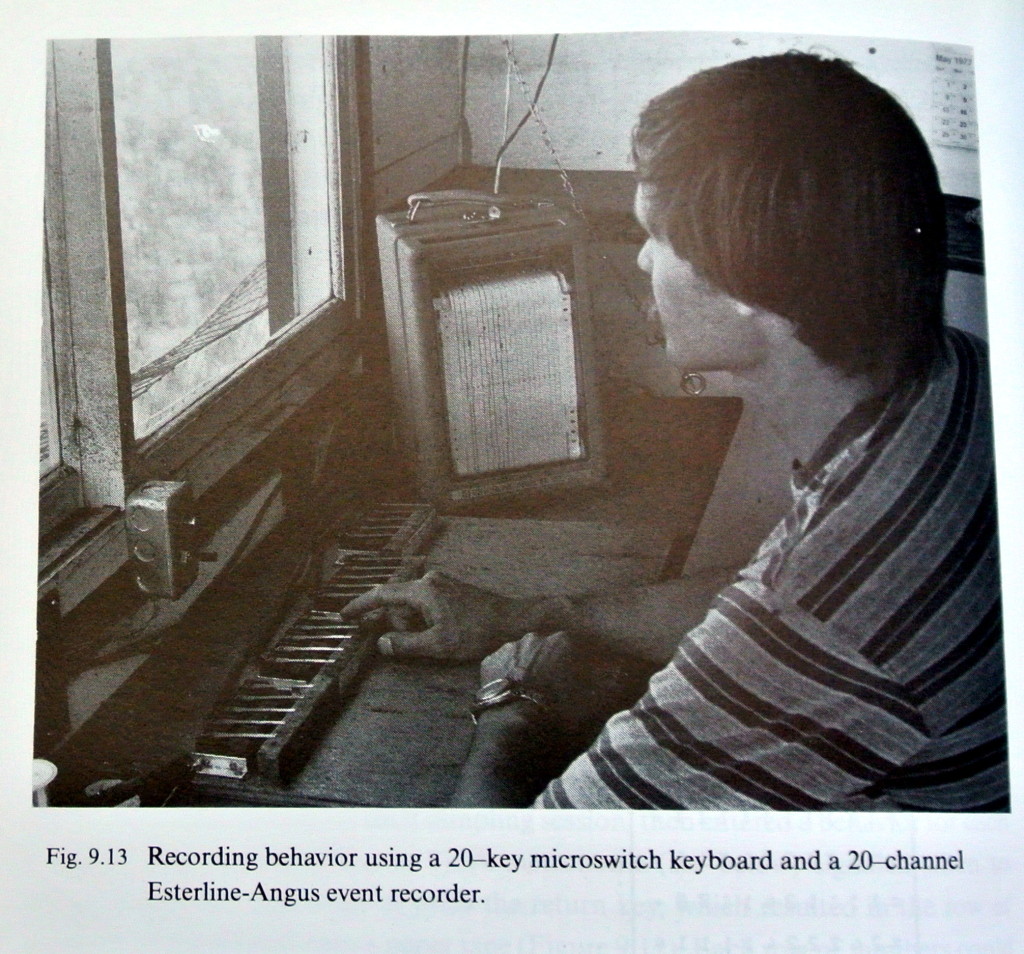
Perhaps the only thing more interesting than the history of ethology itself, is the history of the crazy contraptions that have been designed to support such a science. The most temperamental, yet pervasive, of these tools is the ethogram device.
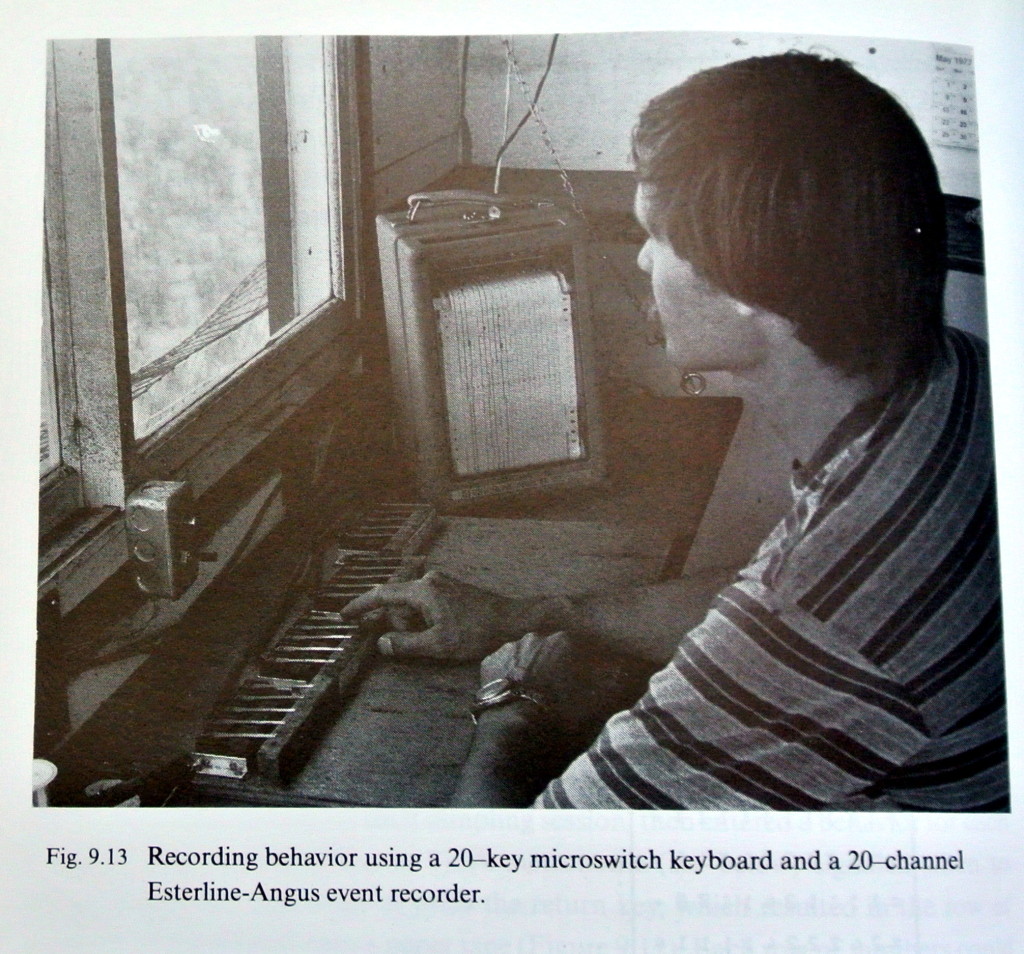
A traditional Ethogram machine

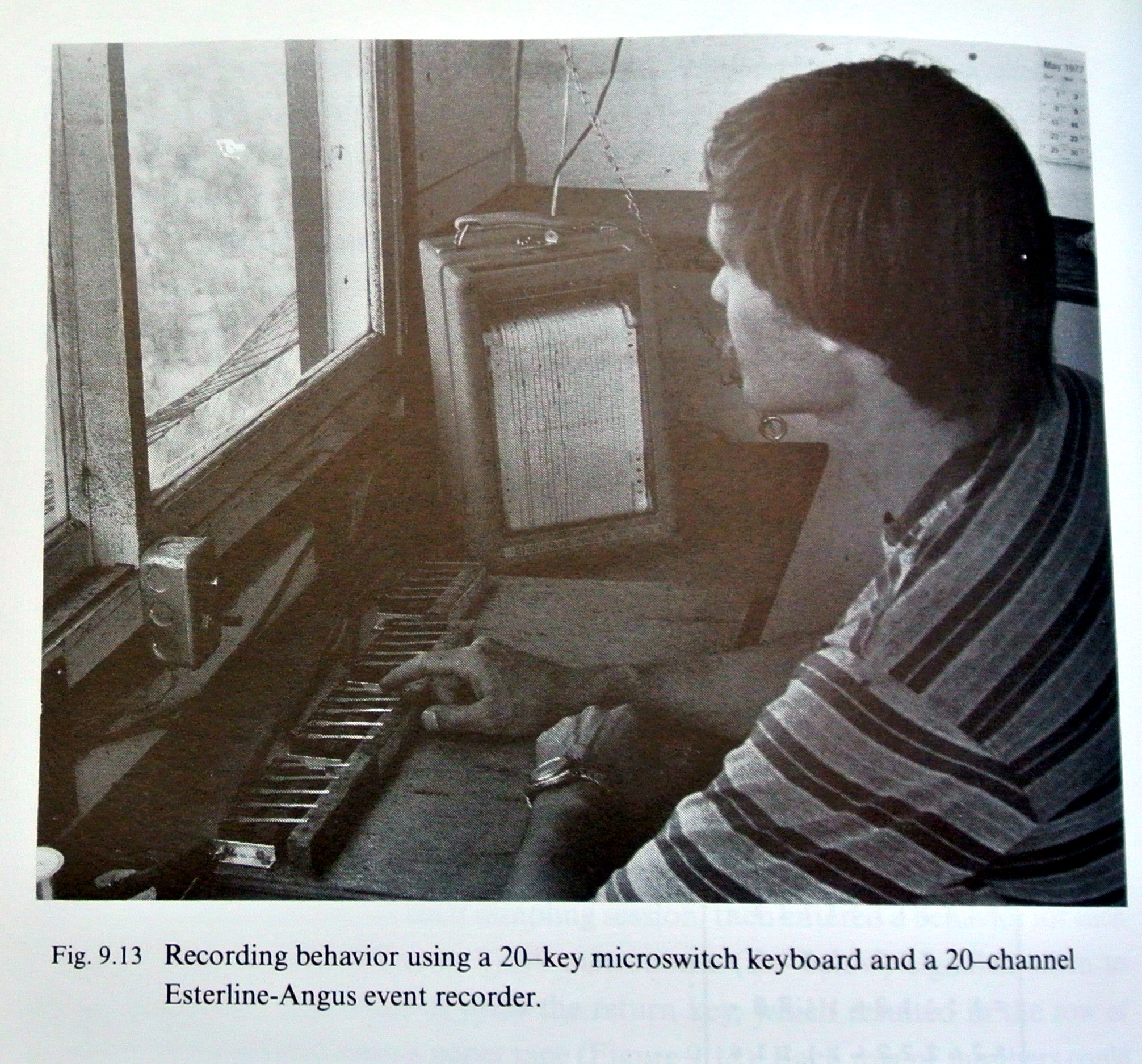
A traditional Ethogram machine

Looking a bit like a bloated calculator, an ethogram is made up of rows of cryptic keys that can be programmed to code in variables of interest. For example, it could be coded to specifically describe the sequence of actions that make up a duck preening its feathers. It could also be coded to log bird songs as they’re heard in a forest. Unfortunately, both ethogram hardware and software has left a lot to be desired resulting in frustrated scientists wrestling a baffling interface. The biggest problem I faced in the field with ethograms was the steep learning curve to a newly programmed set of keys and the uncomfortable knowledge that high error is just part of the game (“Ugh, did I hit A3 or B3 just now?”).
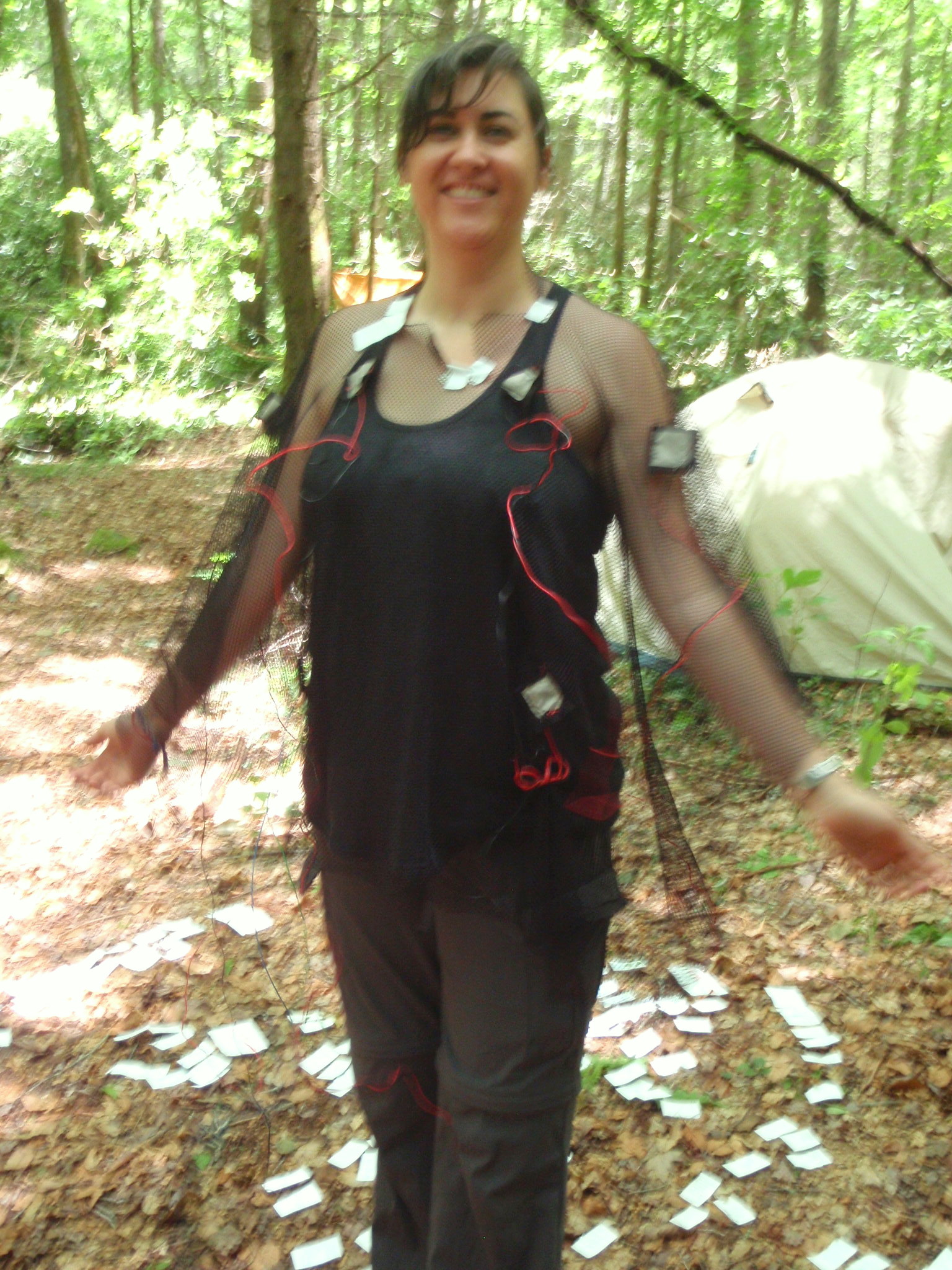
Recording behavior is fun and a behavioral recording tool should be just as fun while also making the job easier! A wearable apron or smock with sewn-in buttons representing behaviors, actions, or species representations might be just the thing to finally re-design the much-maligned ethogram.
Imagine you’re interested in the frequency, type, and maybe even geospatial location of birds calling in a forest. You could program buttons located on your arms, shoulders, hips, and/or thighs to represent different species. By tapping these different locations on your own body as birds call, you’d be leveraging the benefits of embodied cognition – you might learn faster, with less error, and it would be more fun and engaging. Built in feedback using LED lights, and possibly sound, would reinforce your understanding that yes! You did what you thought you were doing (an unfortunately rare feeling using traditional ethograms). You heard a cardinal, you tapped the associated cardinal button and it lit red in response to your touch.This data could be stored and analyzed later to understand call frequency and order sequencing by species. By pulling bird call mp3’s to match with the logged data, you could also aurally recreate that environment any time you like.
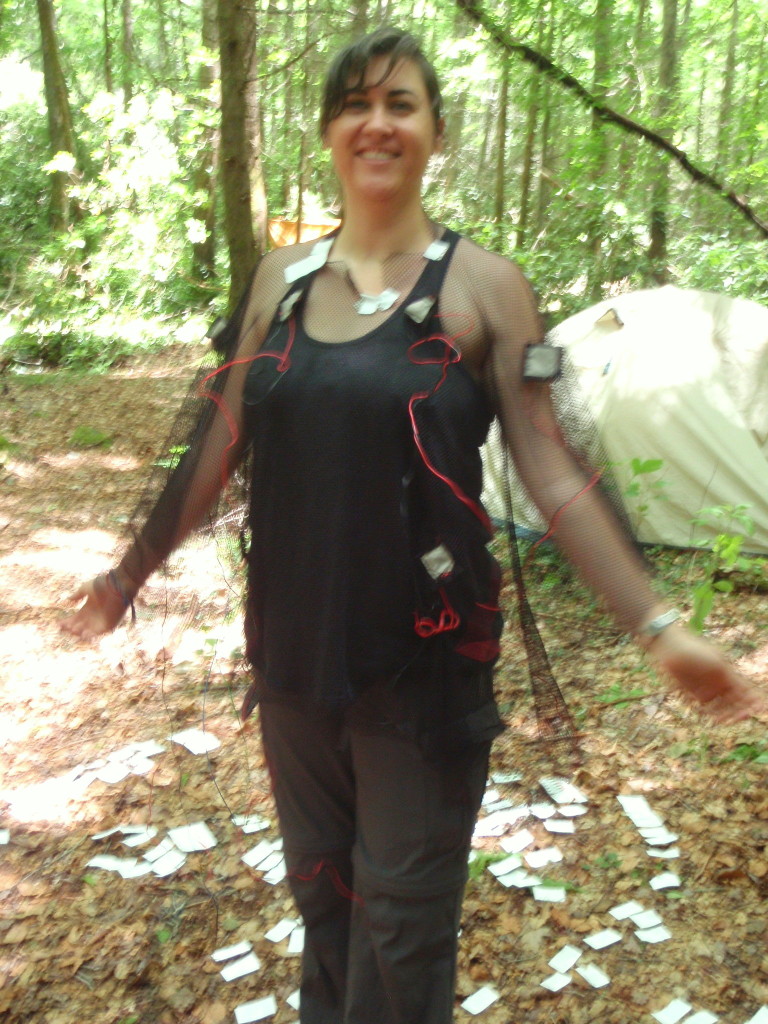
EthoSmock

Ethosmock realized later in the field!

This kind of wearable could also be useful for recording transect lines of plants, trees, and other animals or even logging firefly flashes. I like the idea that the “etho-smock” could not only be a passive logger of information, but also play it back in the form of light and sound (reminiscent of Close Encounters of the Third Kind).
Part science and part performance arts piece – the ethogram might finally enter the 21st century!
-Laura

It’s Over There – a box with a good sense of direction – Paul

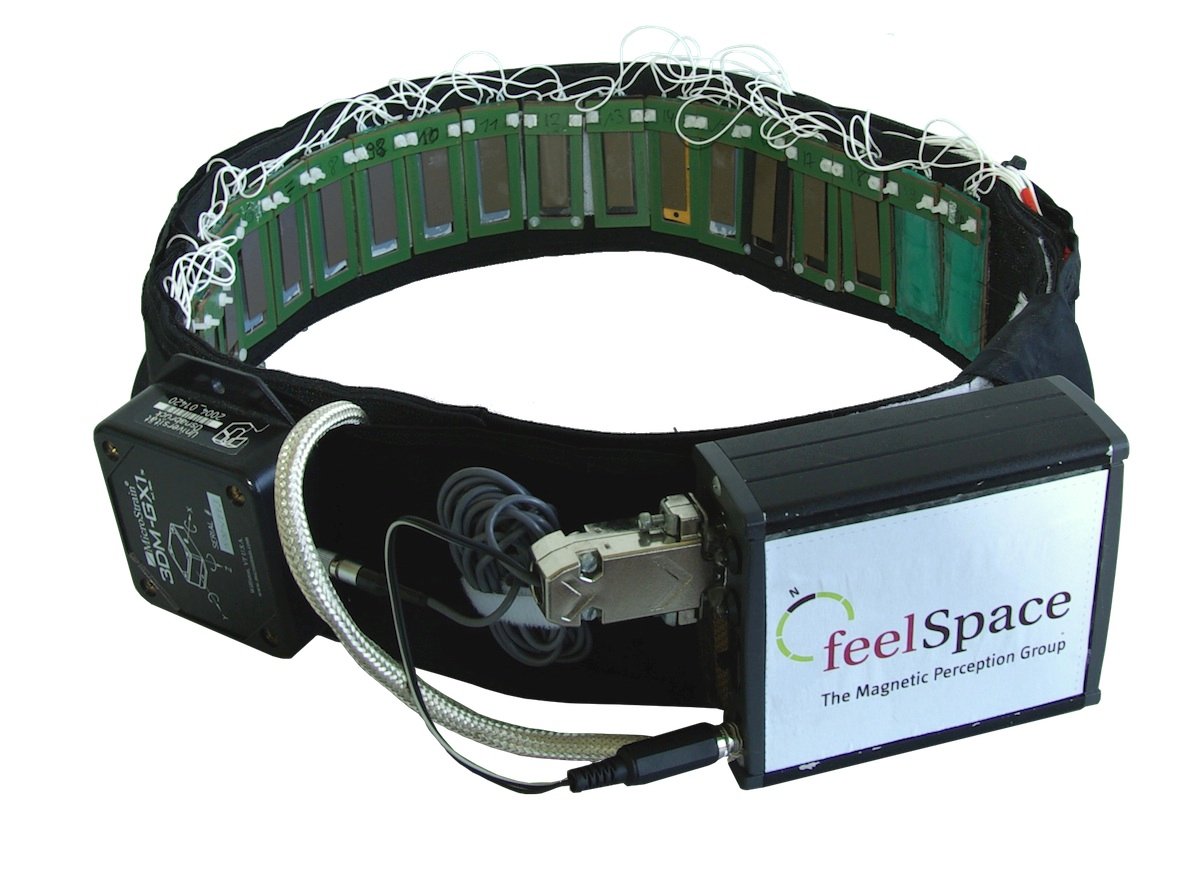
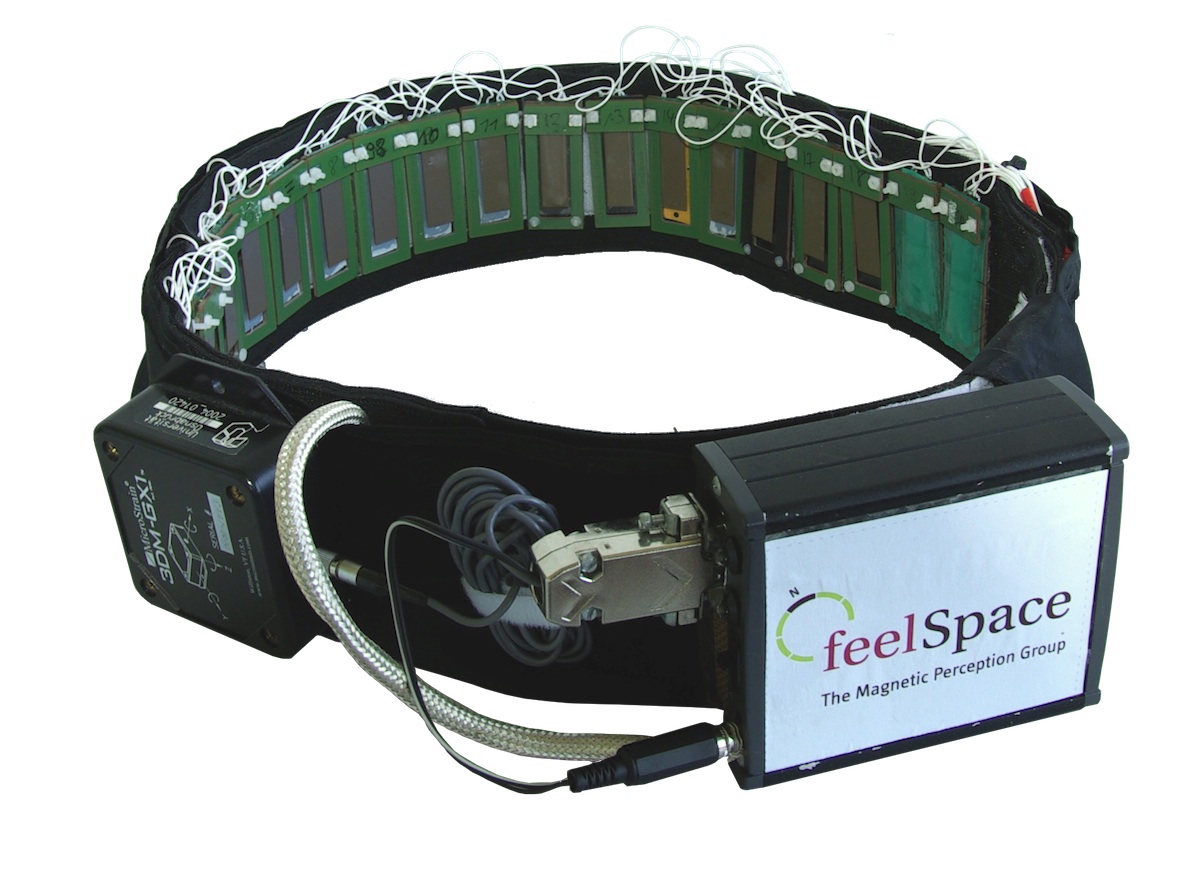
I’ve been thinking about navigation in the wilderness and how digital media can support it. There are a couple of things that are particular to the type of navigation in the wilderness we’ll be doing  (foot travel in a place where routes aren’t necessarily defined and never square)  and some related work that might give some insight in to that topic, which might be the subject of a later post (GPS, FeelSpace Belt, compass).

http://feelspace.cogsci.uni-osnabrueck.de/

Having given it some thought, I’m still not sure where I fall with respect to a persistent sixth sense sort of set up because it fundamentally changes the experience of the world, which isn’t what a naturalist is after. It also adds a layer of complexity that’s not necessary for prototyping and testing tools. So I’m thinking of making a tool that can be used when needed or wanted, but not relied upon constantly (like GPS often seems to be for some reason).

This tool is basically a compass, but it always points to a user defined location. The simplest version I can think of would have a sensor (magnetometer or GPS depending on software) and a microprocessor in it, and a button and an LED with an arrow drawn next to it on the outside. The user pushes the button to set a location. From then on, if the arrow points at that location, the light turns on. I guess a vibration or anything could happen. Output shouldn’t be arbitrary, but I haven’t given it much thought yet.

There are lots of good uses for this, but primarily for me, it becomes a tool for developing a sense of direction that aligns with the type of movements, terrains, environments, and durations that are part of exploring the forest.

Sketch forthcoming.

– Paul

Crew – Wearables in the Wild

The Wearables in the Wild 2015 expedition has attracted quite an amazing crew!

We have a diverse background of ages, jobs, technological and biological experience.  Dozens of incredible researchers, designers, artists, adventurers and biologists, applied, but we were only able to accomodate 10 positions. The final selected participants originate from all around the world, and most of them recently come from Georgia Tech and MIT.

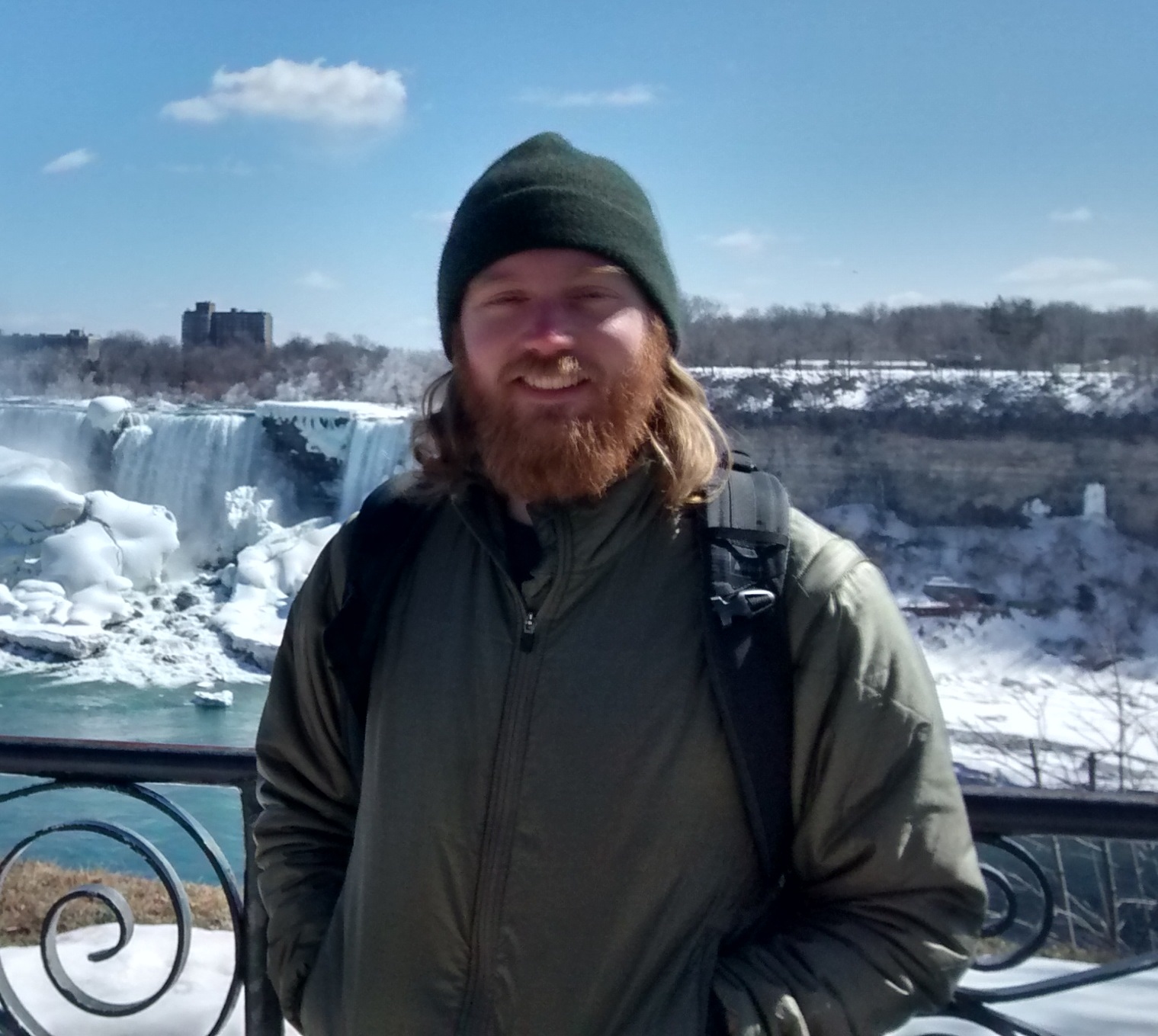
 Andrew Quitmeyer

Andy Quitmeyer is a Polymath Adventurer. His PhD research in “Digital Naturalism” blends biological fieldwork and DIY digital crafting. This work has taken him to the wilds of Panama and Madagascar (and the US) where he’s run workshops with diverse groups of scientists, artists, designers, and engineers. He’s also adapted some of the research to exploring human sexuality with his Open Source Sex Technology startup Comingle. His trans-disciplinary, multimedia projects have been featured in Wired, PBS, NPR, The Discovery Channel, Cartoon Network, Make Magazine, along with many online and local news sources.

Superpowers

  • Carry Heavy Things
  • Hacking
  • Brute Force


Laura Levy Laura Levy

Laura’s interests in organismal behavior have taken her around the world working as a trans-disciplinary scientist in a variety of fields including shark attack research, zooarchaeology, and game design. After more than ten years of museum collections and biological field work, she now works with the Interactive Media Technology Center at Georgia Tech as a Research Scientist. She applies her classical ethology training towards studying how people use technology and how to design experiences that maximize human performance. Current research projects involve video game design, music psychology, augmented reality, and new technologies to support biological field research.

Superpowers

  • Kite flying
  • Parallel parking
  • Bird calling

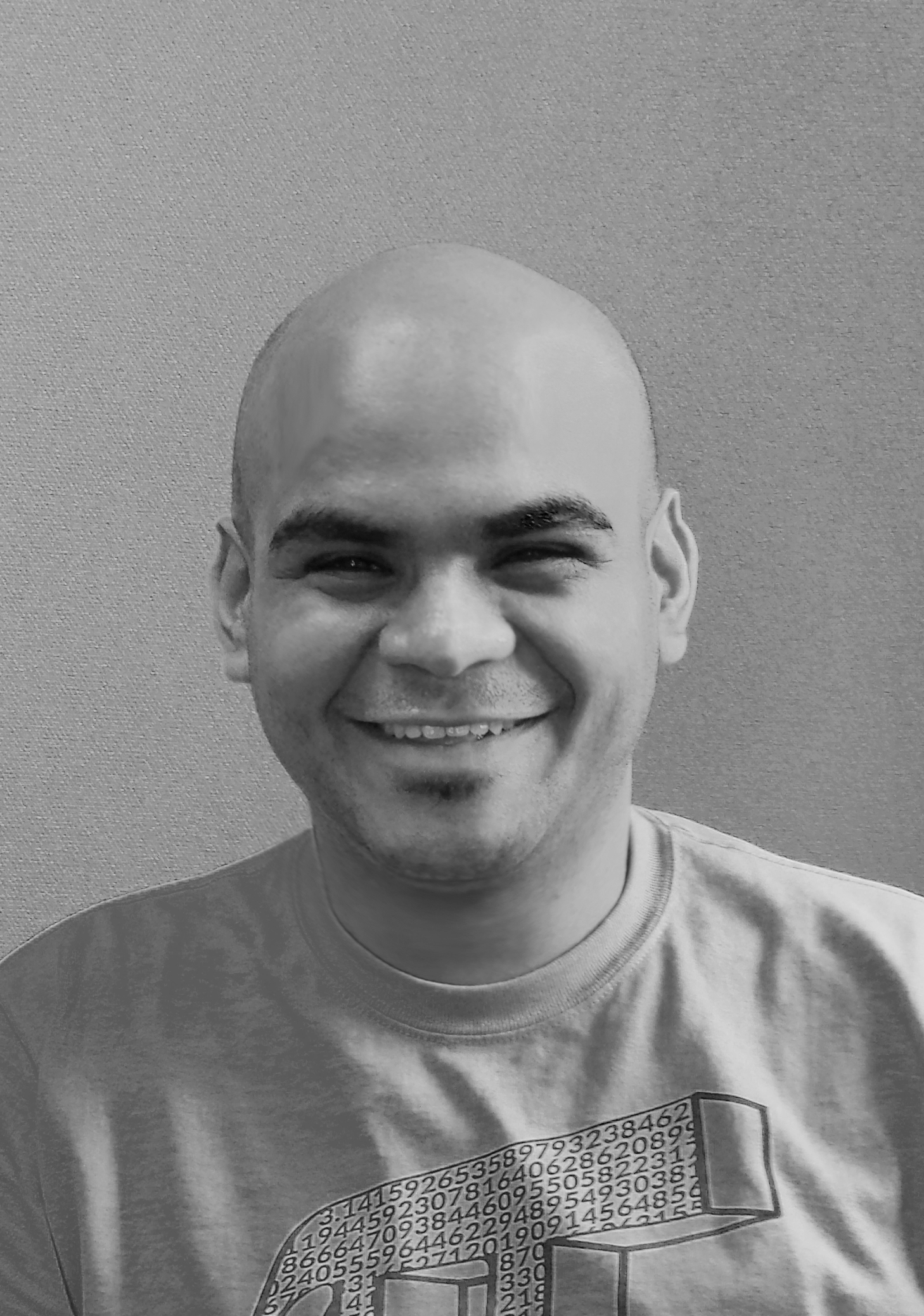
63005 Matt Swarts

Matthew’s work focuses on the translation of human behavioral patterns and perceptions within real, virtual, and augmented environments into computer models and simulations to better understand design decisions. He often develops custom hardware sensors, interactive systems, and software applications for capturing occupant behavior, testing human spatial perception in 3D virtual environments, running discrete-event and agent-based modeling and simulation, and performing spatial analysis in the intersections among Building Information Modeling, Geographic Information Systems, and Human Computer Interaction.

Superpowers

  • Making every cent count
  • Finding ways to make himself replaceable by a computer so he never has to work again
  • Starting new projects

 Shivakant Pandey 

Made in India, Engineered at IIT Delhi, Employed at Sea, Lived in Malaysia, learning ID at Georgia Tech.
These are the headlines, if you will. Shiva, has worked as a Business Analyst before renouncing worldly pleasures and working offshore on ships and rigs for five years across south-east Asia. His experience in theater, along with real life engineering roles help him in visualizing new concepts. He has dabbled with modelling softwares for over a decade now and is fluent in Solidworks and Autocad. Normally referred to the guy with the crazy ideas, he considers brainstorming and ideation as his key strengths. He is good with machines and fabrication.

Superpowers

  • Rapid Ideation
  • Story-telling and quoting movies and series
  • Smiling even when hungover

 Jim Demmers

Jim is completely at ease both in the woods and underwater. An adept scientific diver, divemaster, computer scientist, bushwacker, videographer and passionate explorer of the spaces where art, theory, technology, and community intersect, he’s happiest pursuing a lifetime of active observation and reflection. His current work at GT focuses on research into the development of new techniques for using interactive media to enhance collaborative problem solving, especially in the environmental sciences. His most recent two decades have been spent working with marine biologists on underwater field research and coral restoration projects. Keenly interested in exploring I/O mashups that use sensor arrays to generate novel simulations of natural processes.

Superpowers

  • Brainwaving
  • Deep listening
  • neutral buoyancy

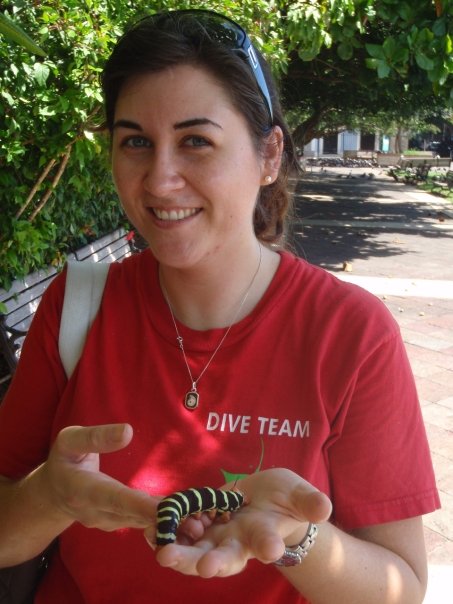
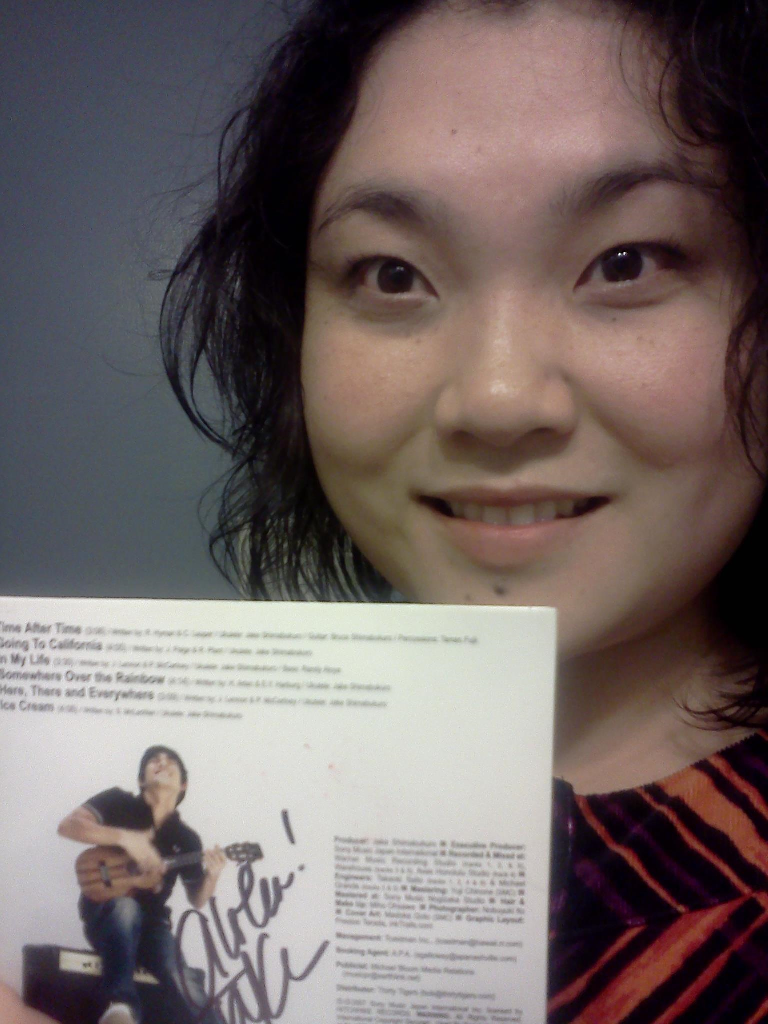
  Angela Yoo

With a degree in biology, Angela has taught preK-12 students, blown up hydrogen balloons in science museums, led sea turtle trips and naturalist weekends, mentored at-risk youth, carted around cases of prosthetic breasts for cancer awareness classes, and worn many hats at various nonprofits for over a decade. She is currently in a Ph.D. program in engineering psychology at GA Tech with hopes of saving the world with human factors and usability principles. When she is procrastinating, she enjoys making fiber crafts, dancing, silversmithing, gemstone cutting, flint knapping, hiking and exploring, and stalking Jake Shimabukuro – the most awesome ukelele player ever!

Superpowers

  • Vacation/activity planning (i.e. daydreaming)
  • Bargain hunting
  • The Laughing Panda Lotus Shadow Kick

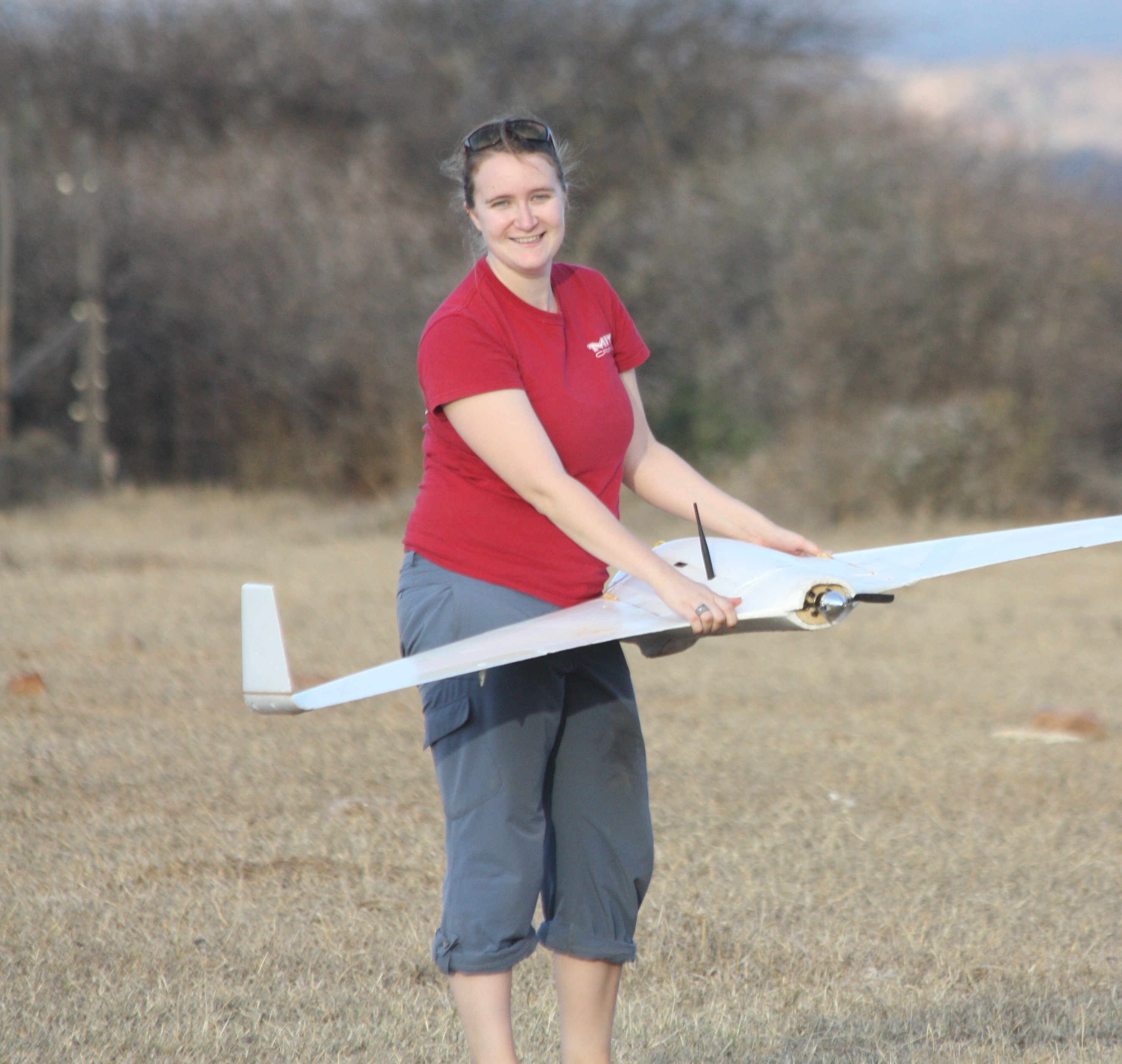
IMG_8845  Katelyn Wolfenberger

Katelyn is a recent MIT graduate with a degree in Mechanical Engineering. She’s passionate about engineering, nature, and exploring, both mentally and in the backcountry. Her research blended those interests by developing sensors for field biologists. She’s chased zebras with drones in Kenya to gather accurate population data and modeled the body temperatures of pikas in the Pacific Northwest. She’s excited about finding novel ways to engage the public with nature, such as developing an augmented reality app for citizen science and talking to anyone who will listen about that really cool critter she just saw.

Superpowers

  • Breaking things, can be used for good or evil
  • Eating enormous amounts of breakfast foods
  • Expedition planning

 Paul Clifton

Paul Clifton is a Ph.D. student in Digital Media at Georgia Tech. He is interested in the embodied aspects of spatial skills such as route planning, navigation, perspective taking, and mental rotation. He has designed and built tangible and embodied interfaces from puppets that track body movement to balloons that send video to an elevator. He’ll be using this trip to design and prototype devices that support the needs of navigation in the wilderness without getting in the way of experiencing the environment.

Superpowers

  • Convincing people to not carry heavy things
  • Listening
  • Planning


Yen AAicy Jeannette Yen

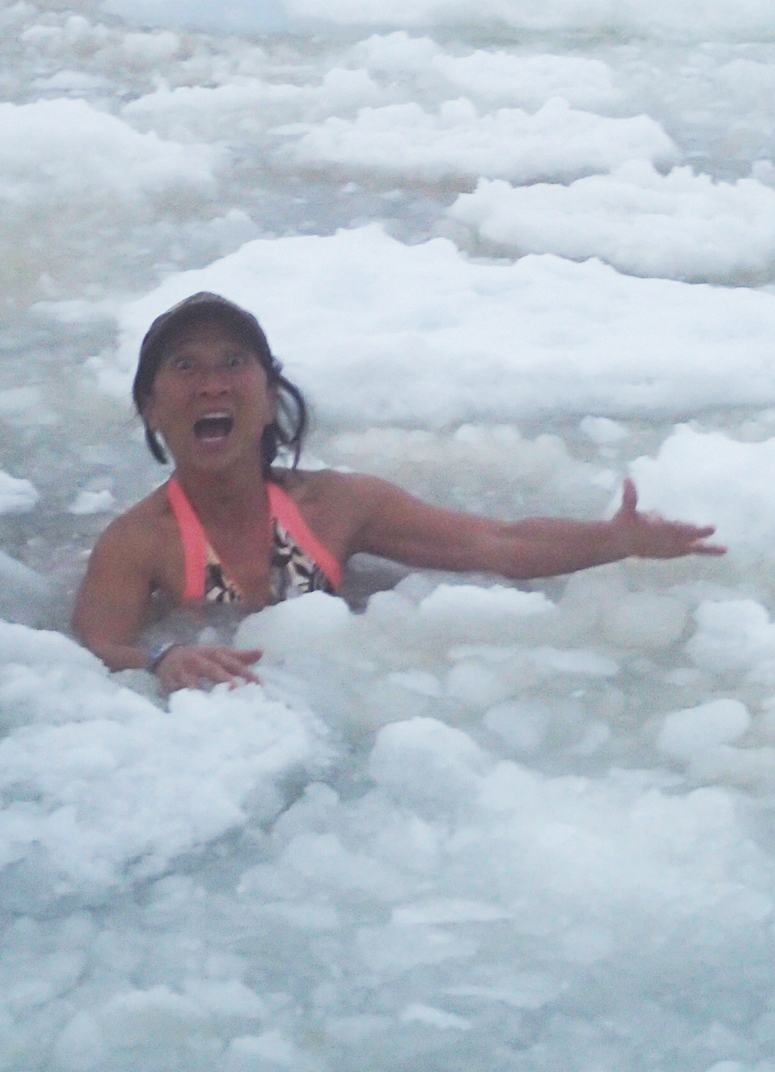
This is Jeannette Yen. I’ve been to all 7 continents and Antarctica wasn’t the last one. Now I am trying to jump into all the world oceans [yes, we did the polar plunge in an icy Southern Ocean. and I did snorkel in the Conasauga River in search of the brilliant darters and hellbenders.]. I am an oceanographer studying how plankton communicate underwater: the little aquatic critters make a disturbance as they swim through the water and other animals sense the semiotic ripples or the delicate scent in the wake and respond, and I am mostly interested in studying the mating response. In the Antarctic, where I just spent 4 months in 2014, I am studying pteropods, a snail with a calcareous shell that swim by flapping in the ocean. Tragically, these beautiful organisms and key link in the food web will disappear from the West Antarctic Peninsula region due to ocean acidification disabling their ability to form a strong shell. Learn more at this website: . At GT, I teach animal behavior and have known about fireflies and their flashy mating interactions. I also love interdisciplinary collaborations and teach a class to test the hypothesis that innovation and creativity occur at interfaces between disciplines, ethnicities, genders, species. I use bio inspired design as my palette where biologists, materials scientist, mechanical engineers, biomedical engineers, architects, industrial designers learn how to communicate to each other and how to work together. I am very interested in sustainable shelters and would like to study how organisms build shelters in the wild. And of course, I want to talk to the animals…all kinds, maybe humans.

Superpowers

  • talking to nature
  • talking to myself
  • expanding design space

 Hugh Crawford

Hugh Crawford is a long-distance hiker and amateur tree enthusiast. He supports those habits by teaching literature at Georgia Tech, something he has done for nearly 20 years. When not parsing poetry, he tries his hand at timber-framing, blacksmithing, and a whole range of practices where he can demonstrate his incompetence.  Current projects include the “Wayfinder’s Library” and a never-ending book-project detailing the trials and travails of hiking the Pennine Way and the Appalachian Trail.
Superpowers

  • Walking
  • Sharpening tools
  • The fine art of disappearing


Wearables in the Wild

The 2015 Wearables in the Wild Hiking Hack takes a crew of biologists, engineers, designers, and craftspersons into the Appalachian wilderness. Our mission, as with many of the hiking hacks, is to test out contextually creating tools for understanding living creatures in nature. Sponsored by the Georgia Tech Wearable Computing Center (http://wcc.gatech.edu/), an extra component of this investigation is how wearable devices can be built in the wild and to withstand the harshness of the wild.

Goals

Biology Target:  explore the Synchronous Fireflies that occur in June!

Technology Target:  Making Wearable devices for exploring the environment and interacting with animals.

Hiking Hack Target: developing and testing tools


Information

Field Notes: We will not have communication access where we are going. Thus we will document the trip when we come back, reliving the trip day-by-day and posting updates as if we were in the field. So stay tuned!

Safety: This is the first Hiking Hack where we will have to worry about bears! We will be needing to be setting up bear traps and all sorts of stuff, but should be all good!

To be extra safe, our emergency contact info is here: [We all made it back safe! contact info removed]

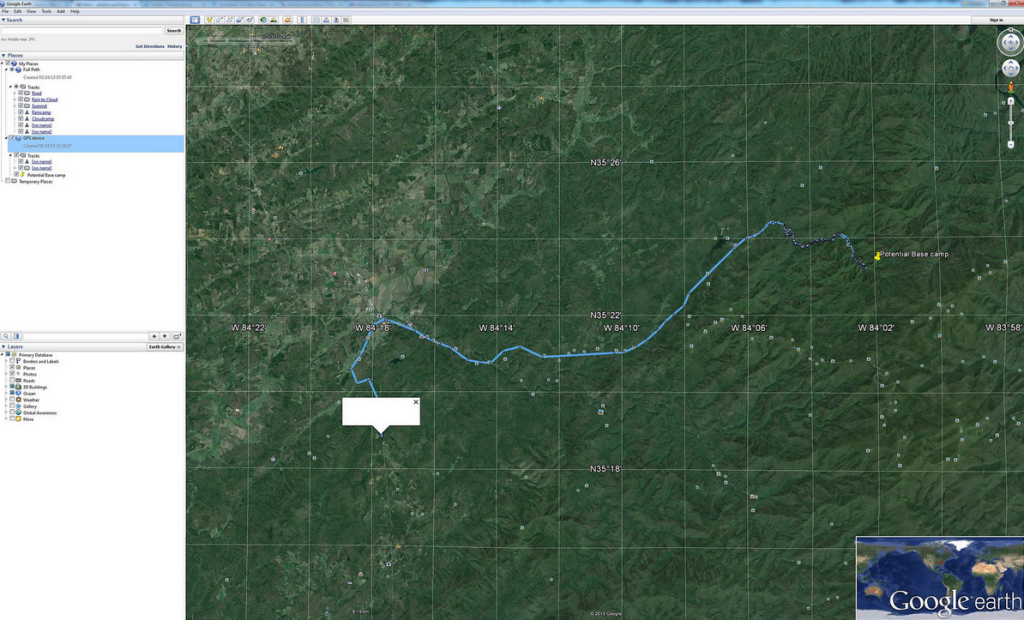
Location: This map also shows about where we will be: https://www.google.com/maps/place/35%C2%B023’14.2%22N+84%C2%B002’07.5%22W/@35.4031385,-84.0116501,12z/data=!4m2!3m1!1s0x0:0x0

Inline image 1

[display-posts category=”wildwearables” include_excerpt=”true” image_size=”thumbnail” wrapper=”div” posts_per_page=”50″ order=”ASC”]

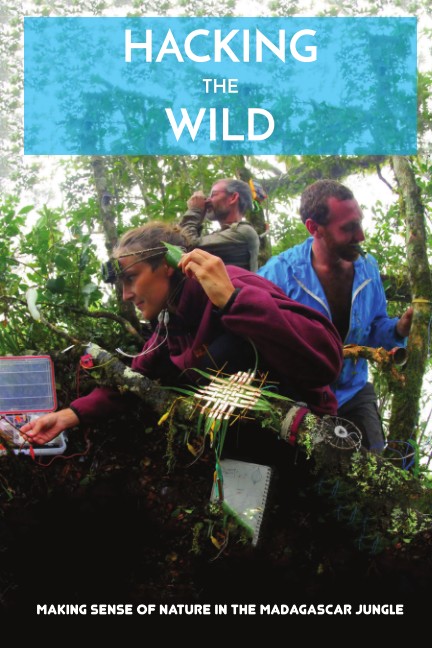
Hacking the Wild: Madagascar 2015 Book

The latest publication from the Wildhackers is now available in print and digital formats! We want to share our adventures, discoveries, and technologies with you! Also 10 dollars of each book sold goes straight to funding new hiking hack expeditions around the world! Every little bit helps us get extra gear like solar panels and sensors along with covering transportation costs and (hopefully) scholarships for potential applicants to join us!

Order a copy now!

This book is freely available too as a PDF! (free as in pizza and freedom)

Hacking the Wild Making Sense of Nature in the Madagascar Jungle

Hacking the Wild: Madagascar

As part of the series of Hiking Hackathons, we launched an expedition to Madagascar in February 2015.

Brian Fisher, head entomologist at the Cal Academy of Sciences, Hannah Perner-Wilson, digital craft designer at Kobakant, and Andrew Quitmeyer, PhD student in Digital Naturalism, traveled to south Madagascar’s Anoyasan Mountain range to explore three main goals:

  • Discover a, yet unclassified, ant found by the 1971 French expedition on the summit of an unnamed mountain
  • Test new methodologies for crafting digital devices in harsh, rainforest conditions
  • Explore ways of documenting and sharing science and design research from the field

P1020404

[display-posts category=”mad2015″ include_excerpt=”true” image_size=”thumbnail” wrapper=”div” posts_per_page=”50″ order=”ASC”]