Author Archives: digitalnaturalism_97q4dl

Participant Journals

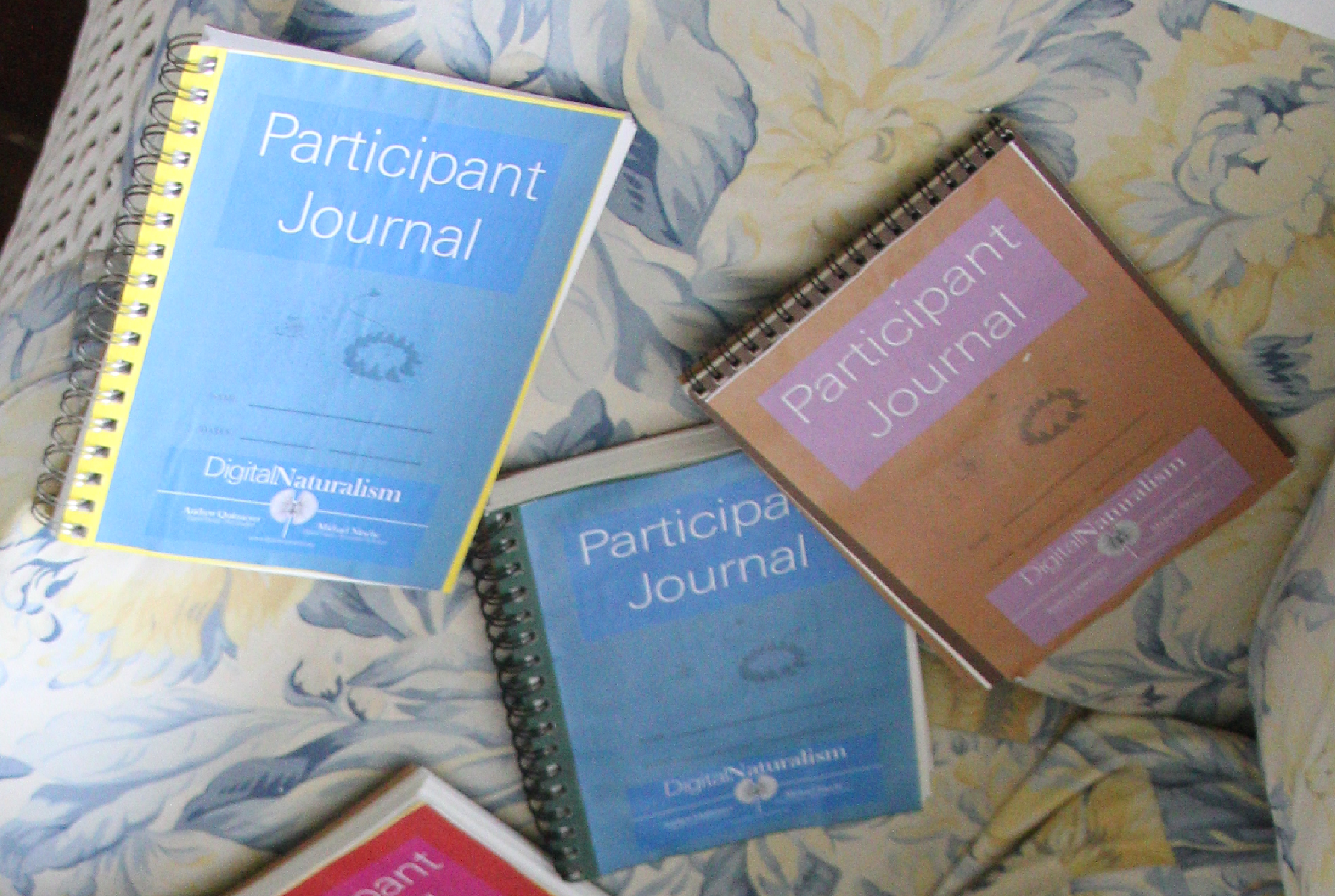
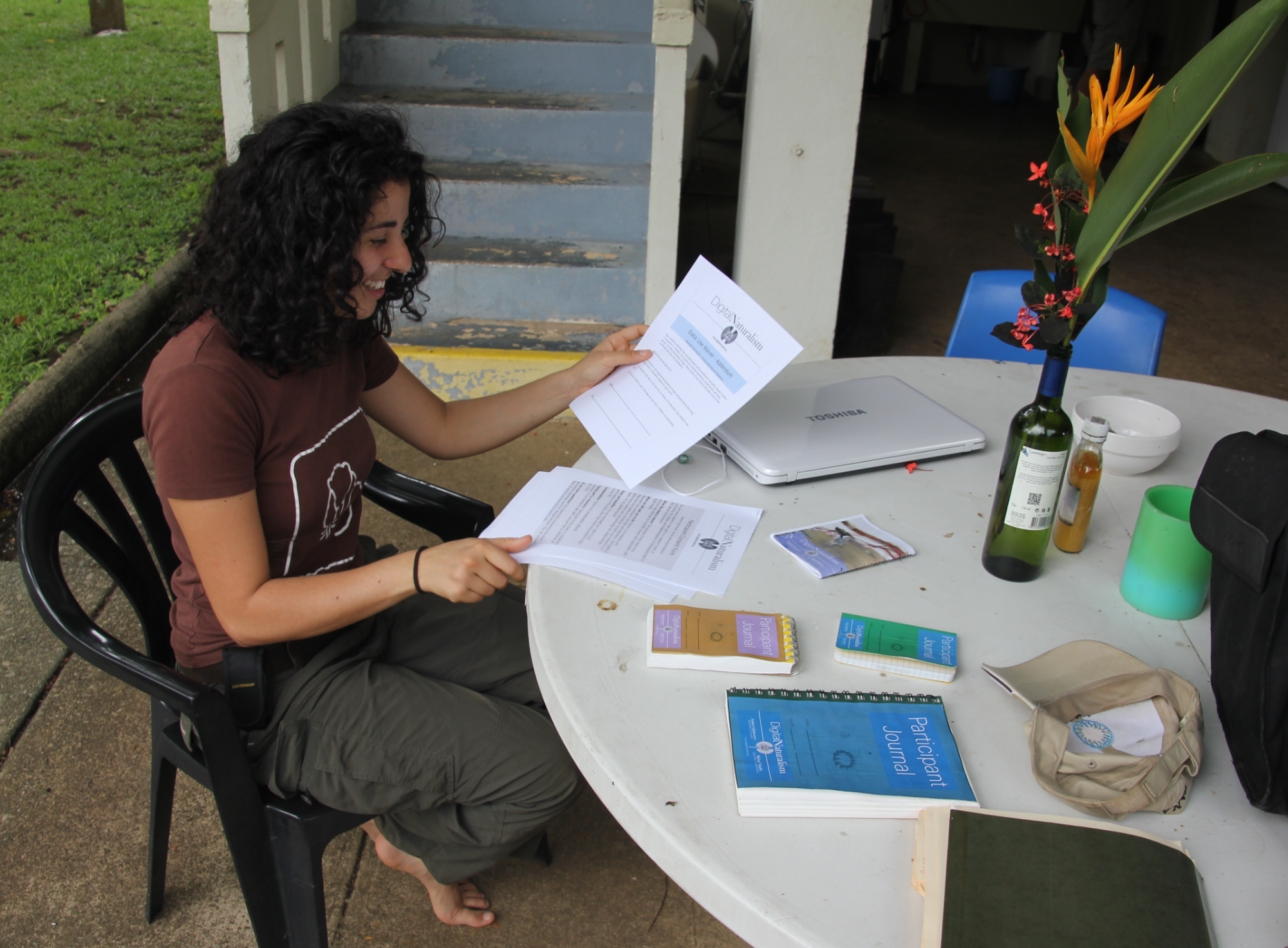
All of my core participants are given their own official journals in which to keep their thoughts. I offered several different sizes, shapes, and abilities of journals so they they could choose on that best suited them. Both Toni and Peter opted for the smaller sized journals with Peter choosing the waterproof one (that you can’t use pens on), and Toni opting for the top-bound mini-drawing pad.

They are tasked with writing an entry everyday, and tackling these four guideline question/tasks (which are glued inside the journal).

—————————–—————————-

Questions for Research Journal

For each day please document your experiences. Here are four questions to also answer for each entry:
1. Describe an animal (or human (or robotic)) performance which you have witnessed or participated.
2. Physically act out one specific detail of the performance now in a new context. Tell us what you selected, why, and any insights to this displaced, separated, reenacted behavior.
3. Did you create, test, or repurpose any tools or techniques today?
4.  In the way that your tool performed, how did it change yours or the animals behavior?
Other questions for inspiration:
How could you turn the behavior into a game? a love story?
What superpowers would let you change the meaning of the behavior? Can you trick the animal? Can you make it do the opposite of normal?
What props or objects could help you embody life as your animal?
———————————————————————–
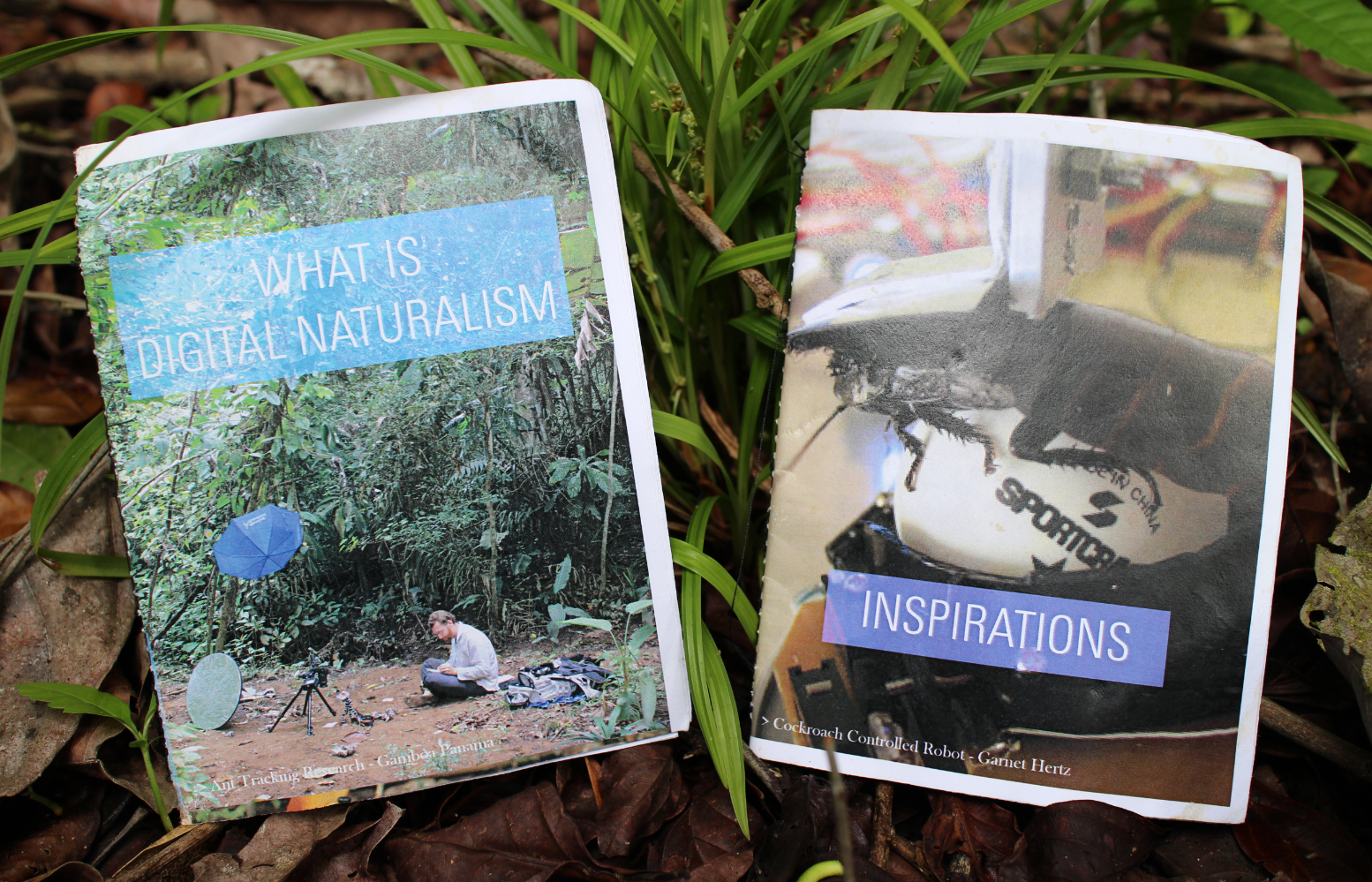


Digital Media Field Guides

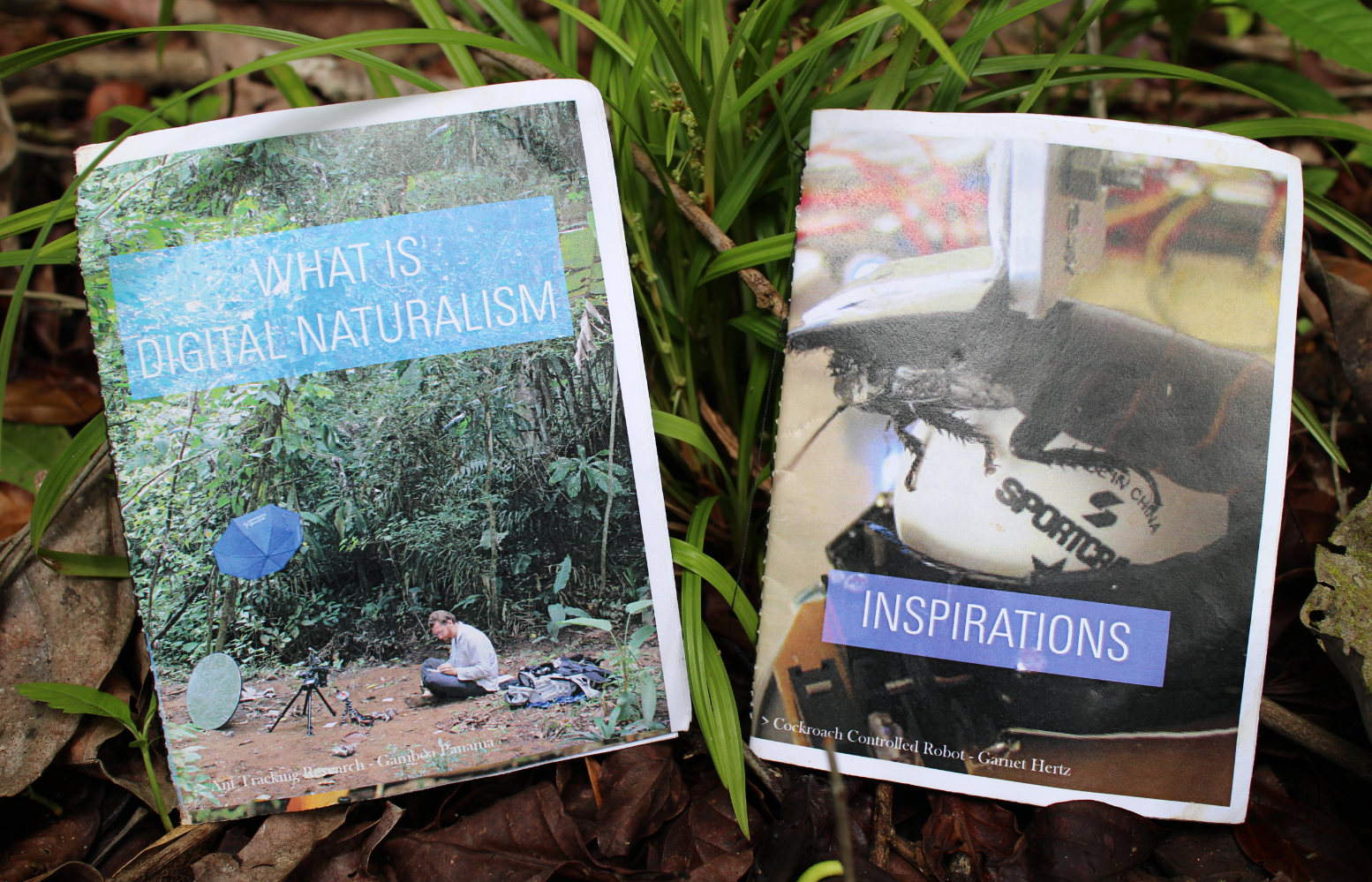
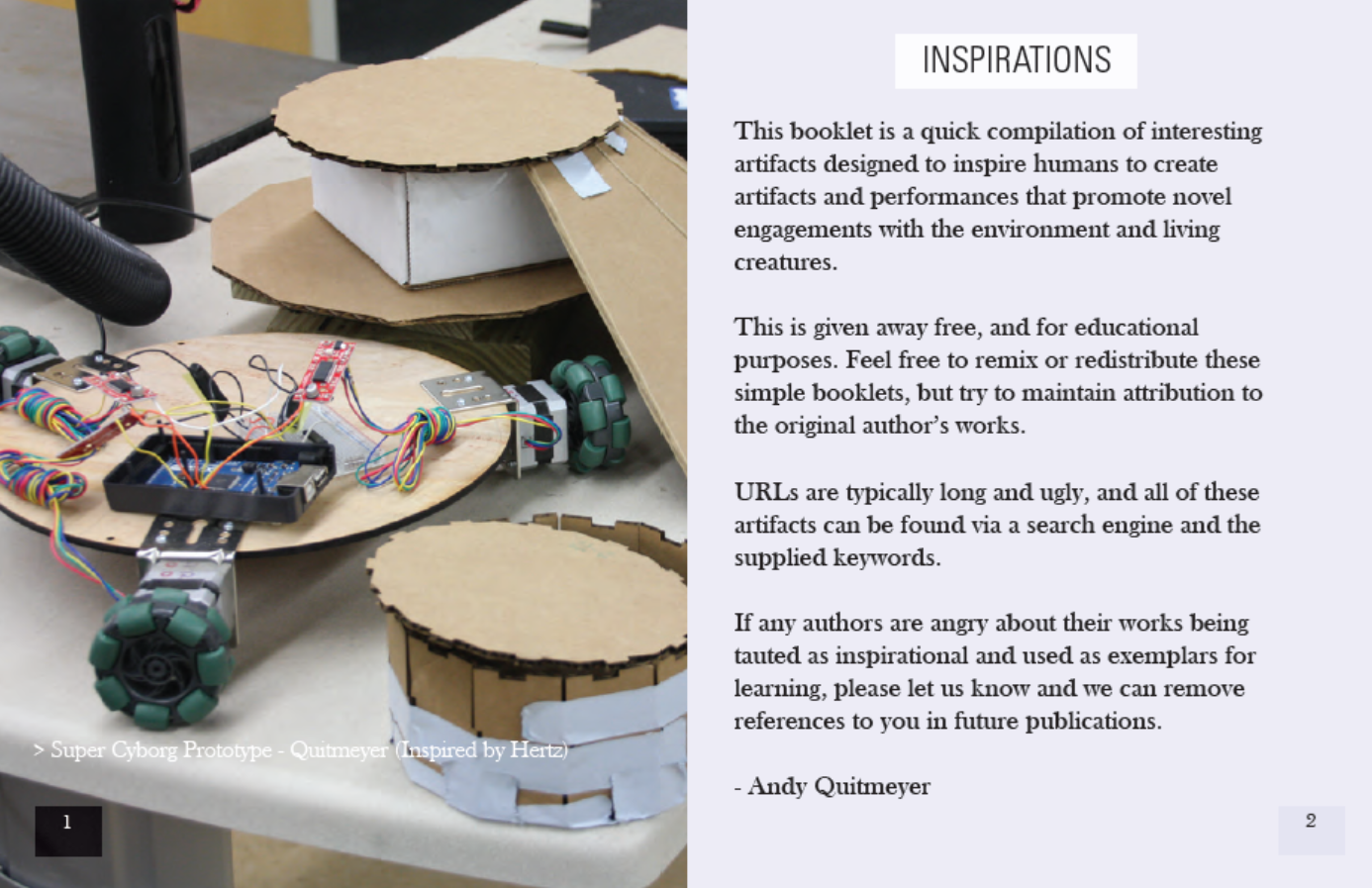
“What is Digital Naturalism” PDF        “Inspirations” PDF    Design Considerations for Ethology PDF

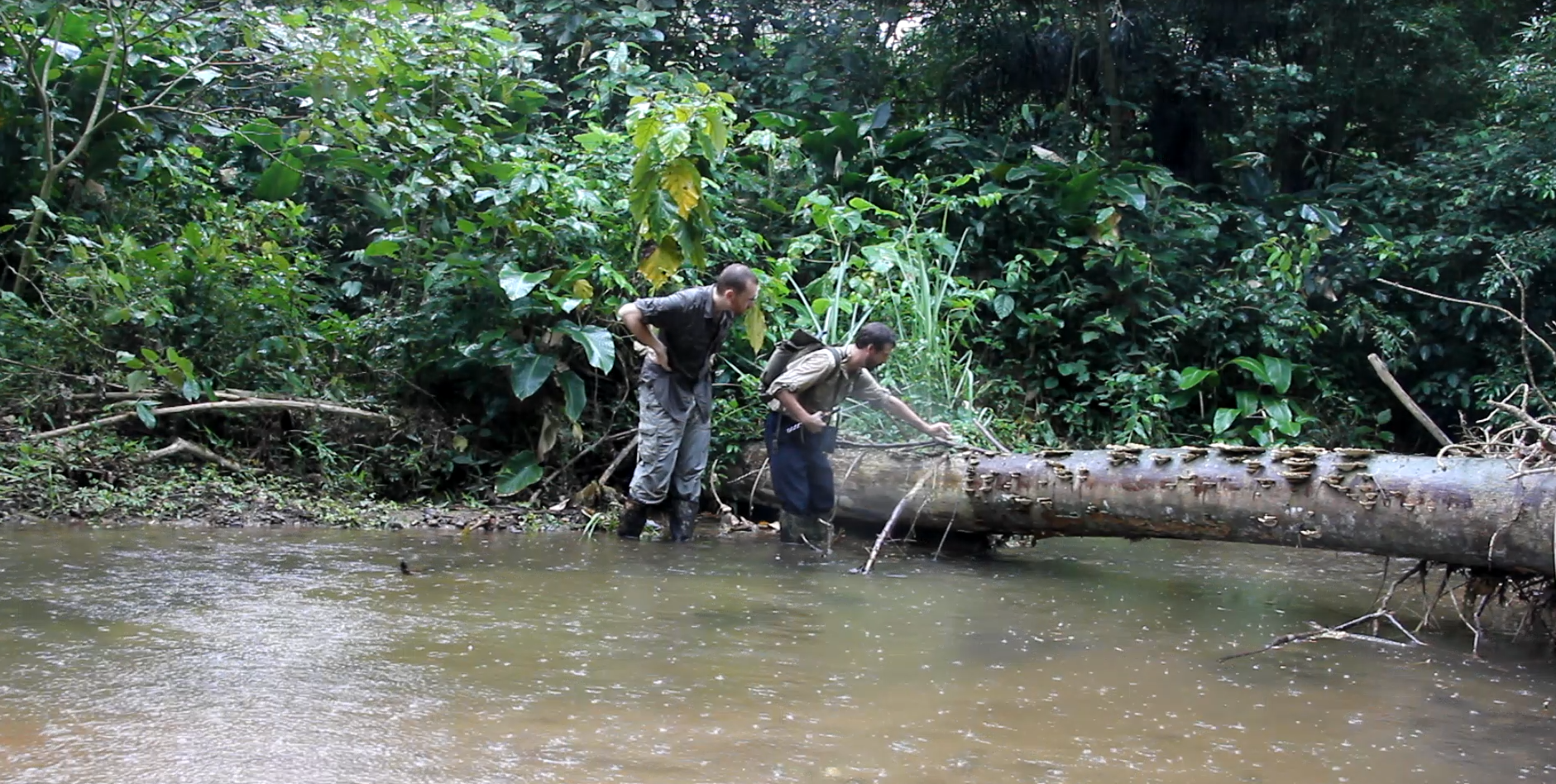
I compiled several different projects at the intersections of performance art, literature, design, physical computing, and cybiotic animal-machines. The goal was to have a rich reference guide for scientists to browse, investigate, and potentially adapt to their own approaches for engaging with or  disseminating their research. I also made another guide, “What is Digital Naturalism” to quickly explain my research, when encountering interested parties in non-digital places (like the jungle).

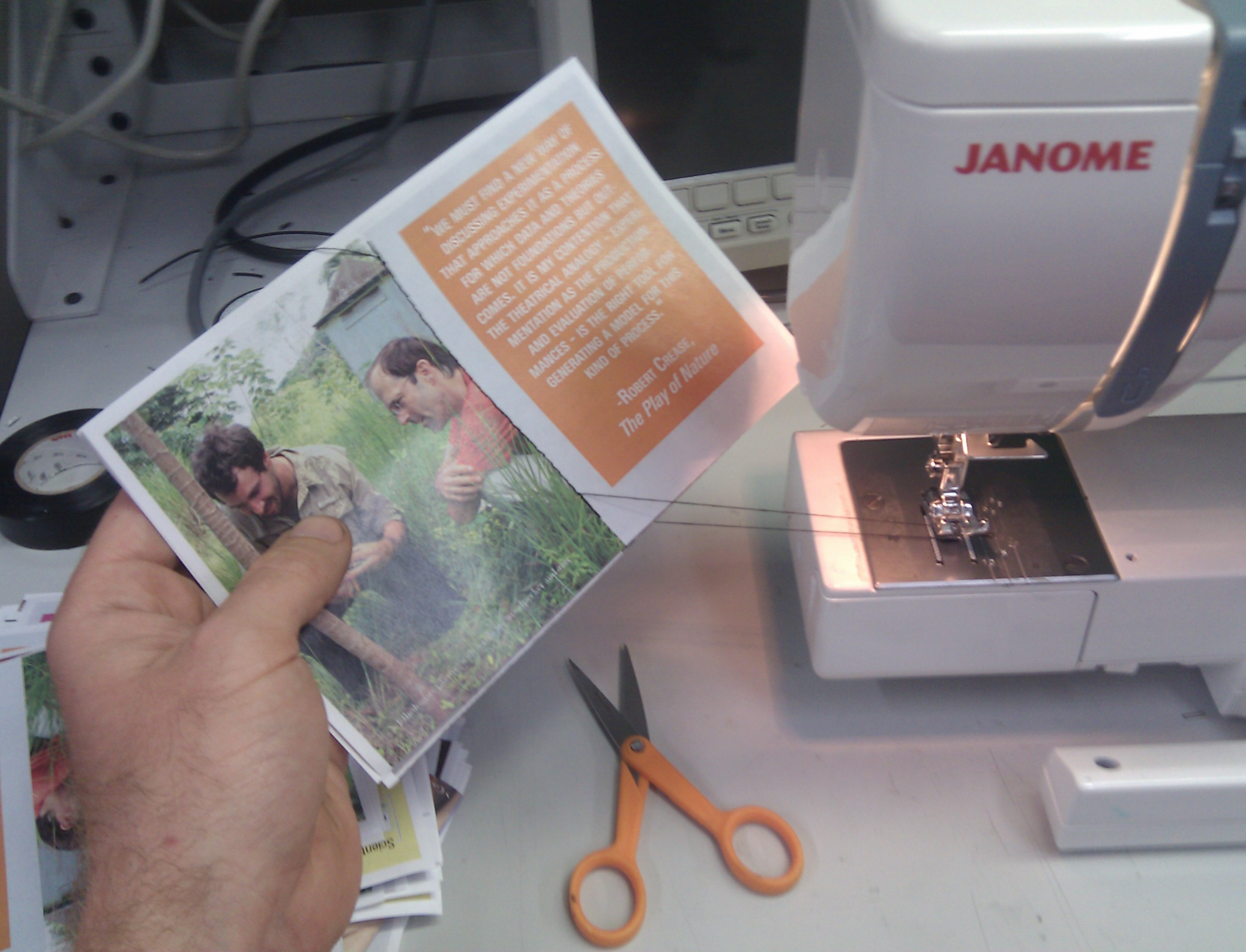
For visual and textual knowledge sharing, this project faced interesting design challenges. I wanted to make booklets (by hand, since it was the cheapest) that the biologists could bring with them into the field and reflect on, in situ, during down time. My thought was that this could be additionally inspirational, but it also posed extra challenges. The booklets would need to be tough to survive in a field biologist’s backpack, and also not be too heavy.

This lead to my design of 1/4 page sized booklets, printed off our common GT printer (double sided), which I then sewed together for durability (and because the staplers were too short and the staples fell out too easily).


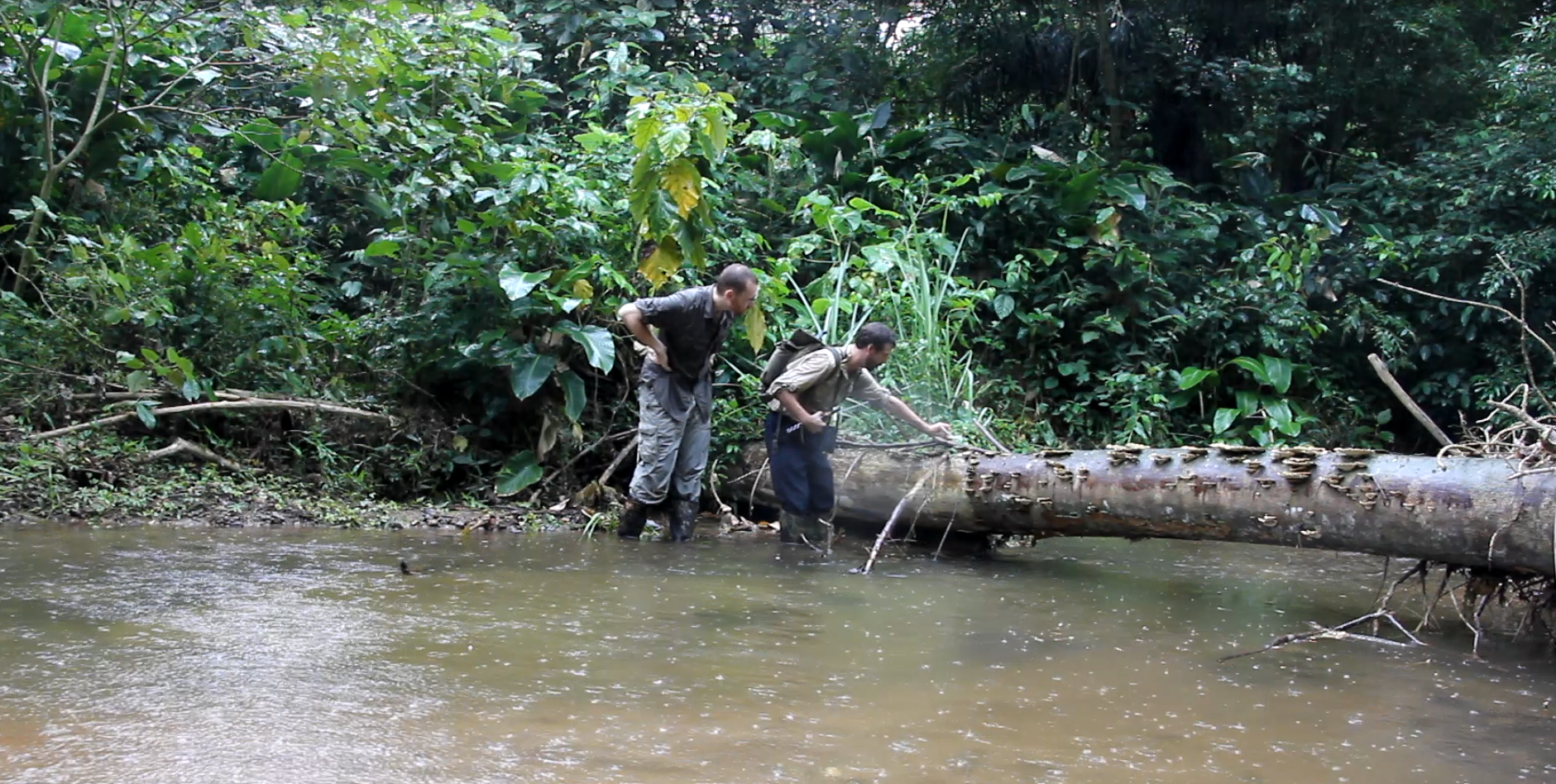
Jungle Techno Performance 1

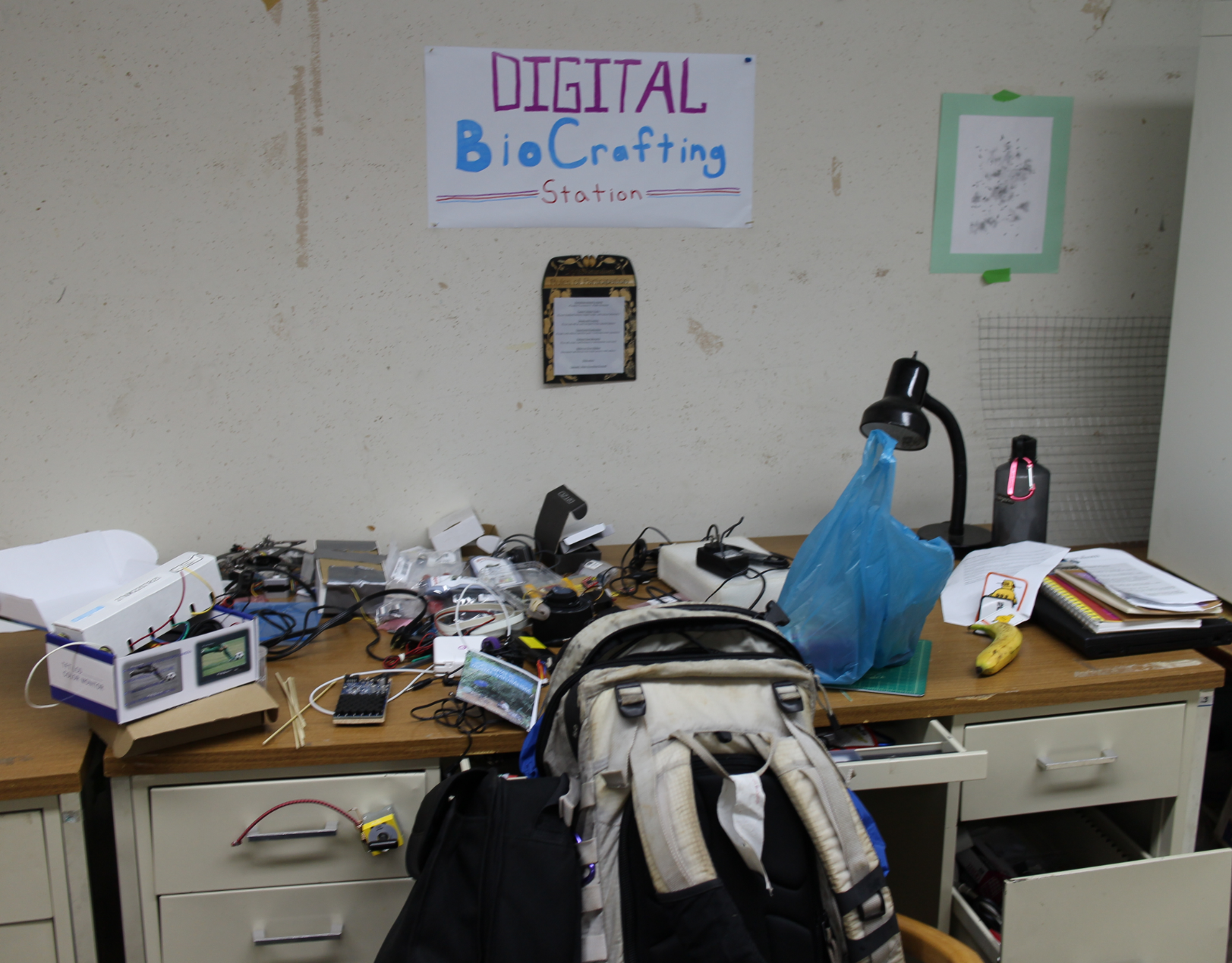
I instructed peter to take two techno-artifacts from our messy biocrafting station which we were setting up (it has a sign now!). We would use these to enact some sort of performance prototyping a behavioral tool. As with any performance, I find myself always internally cynical. I default to being my own devil’s advocate despite the purported performative basis of my research. Before hand, i always have a nagging feeling of, “this is stupid, we are going to dance around and pretend, and nothing will be accomplished because we know what’s going to happen.”

But all this serves to continually prove my point where, by forcing myself or others to physically realize a theoretical model of action, the doing immediatly 1) reveals the mental crap clogging up the original idea, 2) inspires and manifests unthought of arrangements, and 3) polishes the revealed good parts that were supporting the original idea.

At the end I had him bow and it seems like it would be a good idea to come up with a set of these performance self signals (ahhh there is a word for these in ethology that i cannot remember right now) where a creature performs certain actions that put it into and pull it out of a certain behavioral state. The self-signals can help put the performance into a focused activity for better reflection.


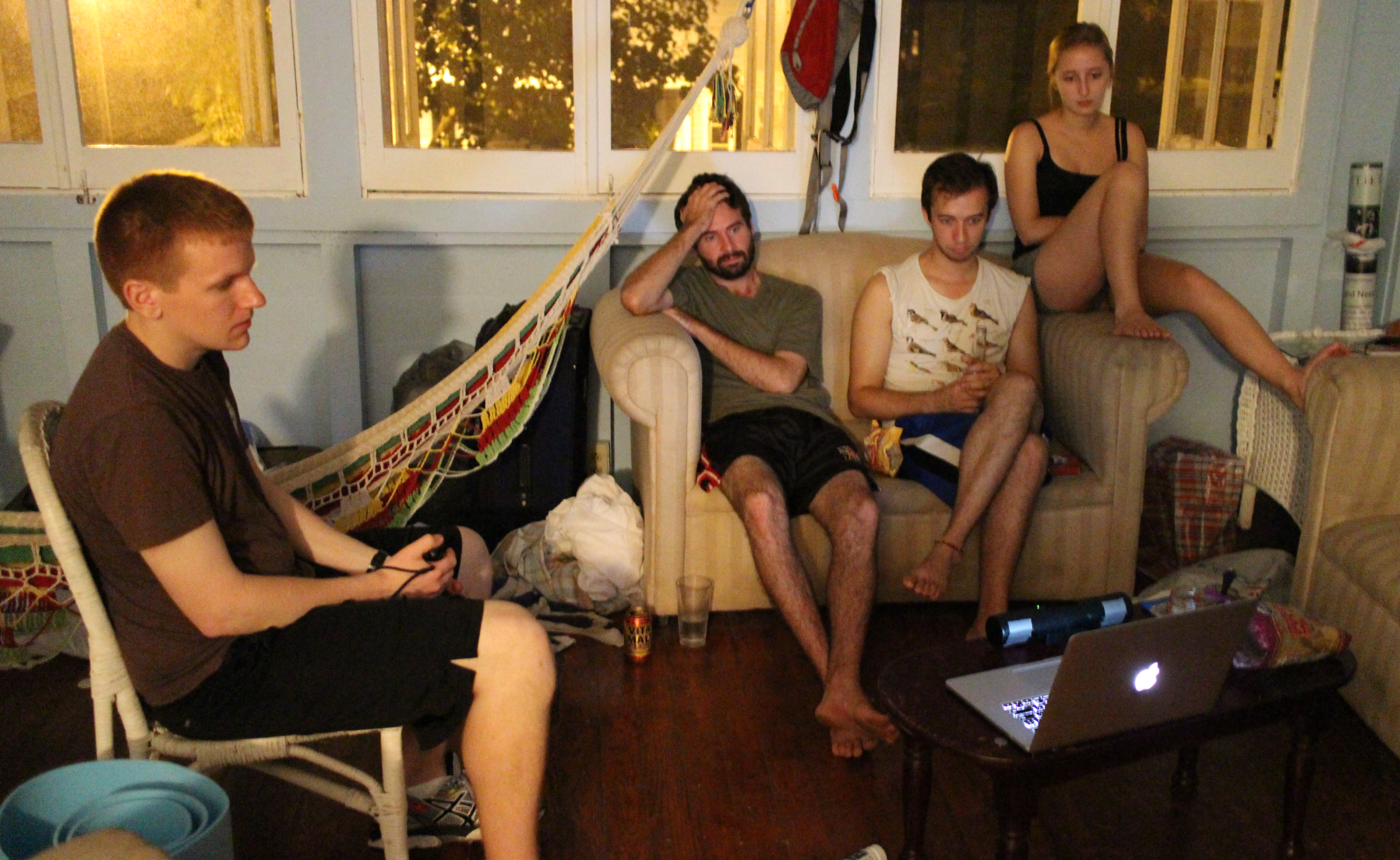
Showed the film, The White Diamond, by Werner Herzog this evening between jobs, and everyone loved it!

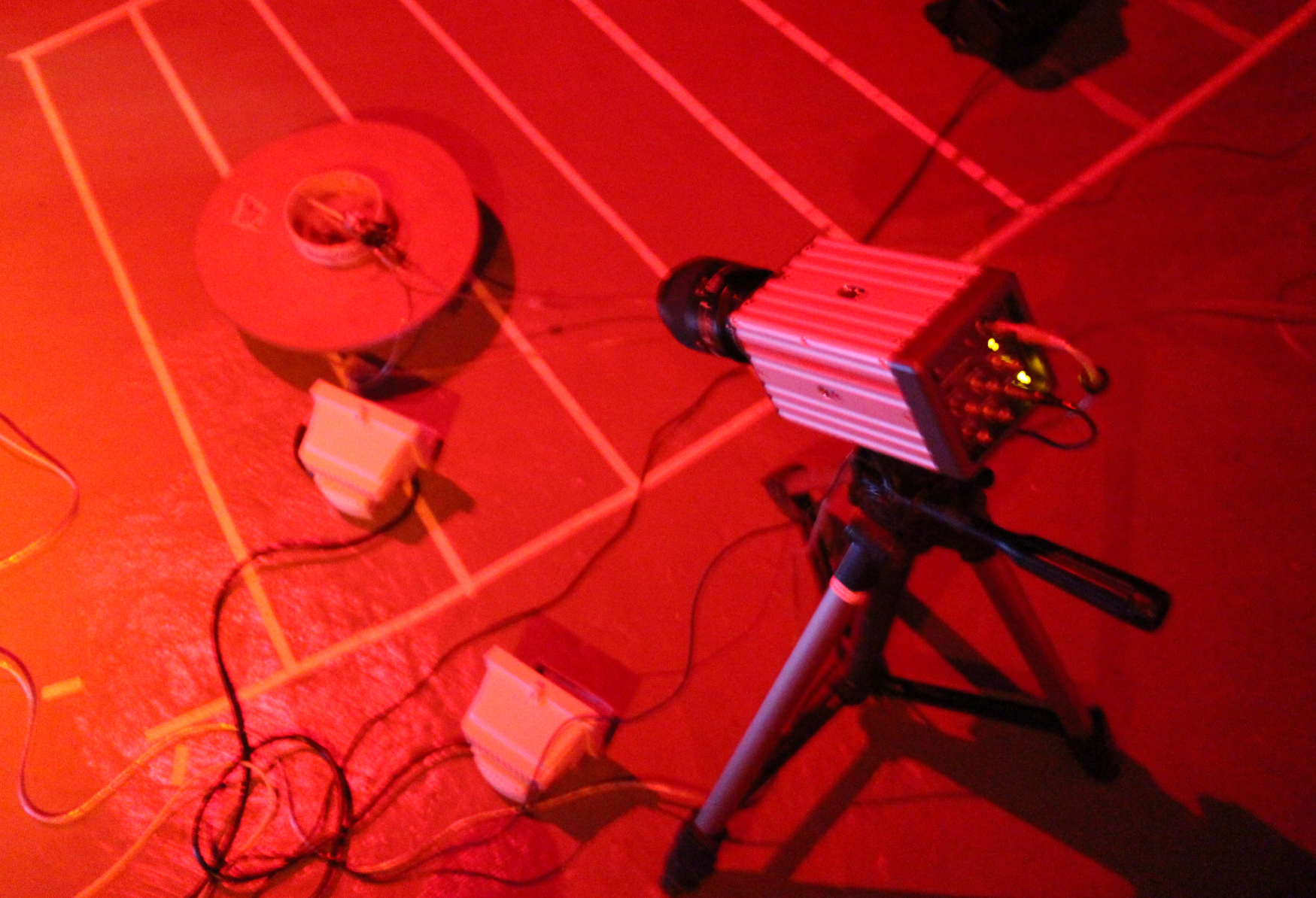
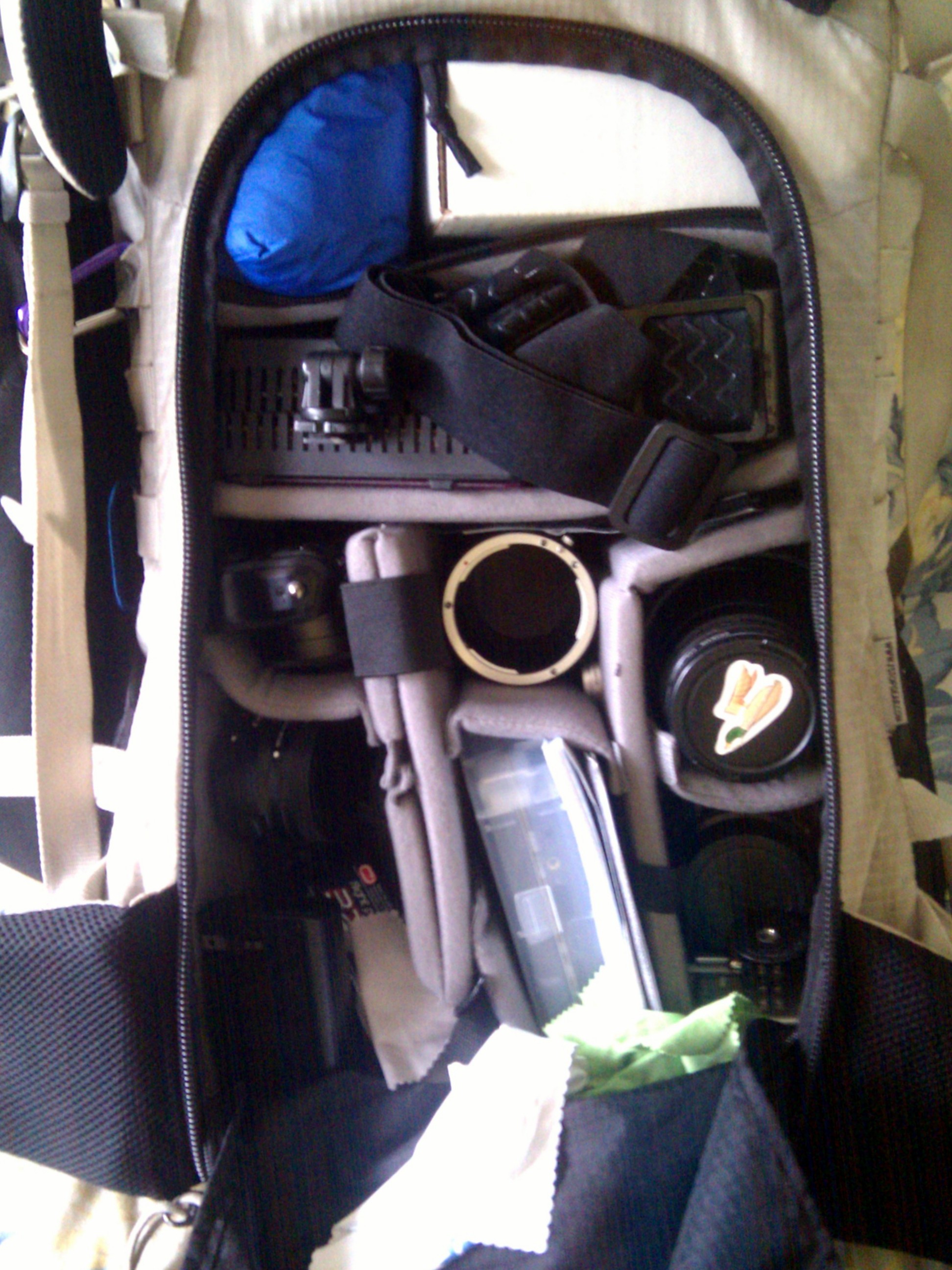
Am now about to [truck pulls up] help Santiago and some of the bat crew test their high-speed camera they are borrowing from Wcislo. Through pure perserverence in fighting unmatching equipment (they only had a nikon adapter, but canon lenses for the high speed camera), I made the strange discovery that canon Eos-M lenses can mount directly to the nikon. We haven’t been able to check and see if the lens distance isn’t too screwed up or anything, but it certainly fits just fine right in there.


Hannah Perner-Wilson: Collaborator

Hannah Perner-Wilson combines conductive materials and craft techniques, developing new styles of building electronics that emphasize materiality and process. She received a B.Sc. in Industrial Design from the University for Art and Industrial Design Linz and an M.Sc. in Media Arts and Sciences from the MIT Media Lab, where she was a student in the High-Low Tech research group. Since 2006 Hannah has collaborated with Mika Satomi, forming the collective KOBAKANT. In 2009, as research fellows at the Distance Lab in Scotland, KOBAKANT published the website titled How To Get What You Want, where they share their textile sensor designs and DIY approach to E-Textiles.