Come along with us and see the amazing studio we set up entirely in the wilderness!

Come along with us and see the amazing studio we set up entirely in the wilderness!
Days i and ii: Pre-workshops
| First Day |
|
| Second Day |
|
Day 1: Hike In
| Challenge |
|
| Activities |
|
| Reflection | · Evening Journal Writing |
Day 2: Hike In
| Challenge |
|
| Activities |
|
| Reflection |
· Evening Journal Writing |
Day 3: Exploration Day
| Challenge |
|
| Activities |
|
| Reflection | · Evening Journal Writing |
Day 4: Build Day
| Challenge |
|
| Activities |
|
| Reflection | · Morning Journaling· Evening Journal Writing |
Day 5: Documentation Day
| Challenge |
|
| Activities |
|
| Reflection | · Morning Journaling· Evening Journal Writing
· Digital Daypack Design Jam o Teams create and present new physical concepts for |
Day 6: Bonus Day!
| Challenge |
|
| Activities |
|
| Reflection | · Morning Journaling |
Day 7: Hike Out
| Challenge |
|
| Activities |
|
| Reflection | · Morning Journaling· Chat and hang out in van
|
Day iii: Documentation Workshop
| Challenge |
|
| Activities |
|
| Reflection |
|
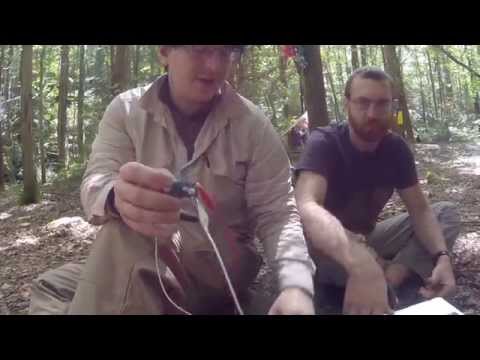
Matt Swarts and Andy Quitmeyer came up with a way to cheaply power laptops and other high-voltage devices off cheap powerpacks! Difficulty: Medium-easy. We cha
Laptops demand lots of power. They also usually need to charge from voltage source that is much higher than the 5 volts you can get out of cheap cell-phone charging powerpacks. This means that usually you have to get a really expensive power-pack (like this one for $100) that can output the 12-20 volts that your computer needs. These power-packs also need a higher-voltage themselves to start charging, so they are much harder to get charging from my solar panels than other cheap 5V packs.

19V power source (costs $100)
Instead you can now use something cheap like this 5V power supply that only costs $16.

and all you need is one extra simple part that can boost the voltage for only $4!

Materials Needed:
Tools
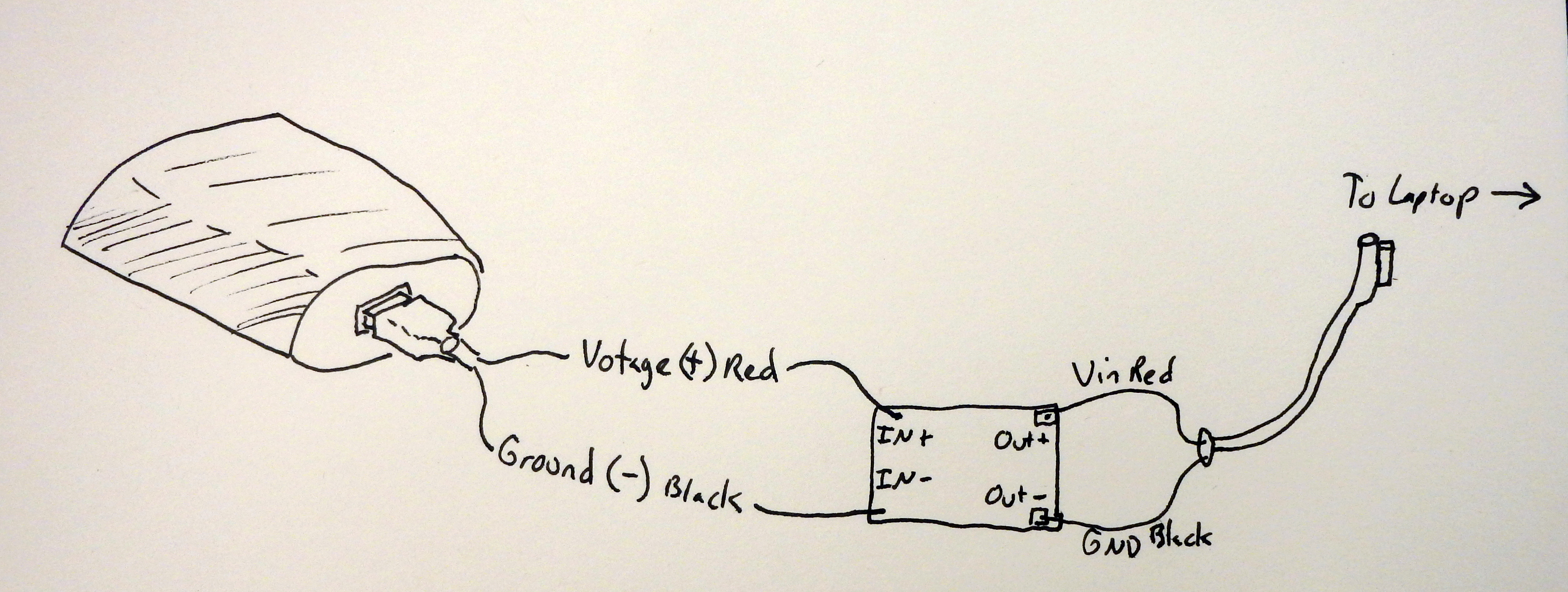
Schematics for Hooking up device
Just connect the positive and Ground from the power-pack to the “IN” ports of the booster. Then connect the + and – ports on the “out” side to the laptop charging cable (you can get cheap “repair” cables that have nice leads already pre-taken out.
Now before you rush off to plug this thing into your laptop you need to set the voltage booster to the correct voltage. Some voltage boosters have a built-in display that lets you know what they are set to, but others you will need to connect a multi-meter.
Find the original charger for the laptop and make a note of the voltage that your device requires. Rotate the small flat-head screw on the top of the booster until you get the correct voltage. Boom, any of the even moderately hard parts of this how-to are done!
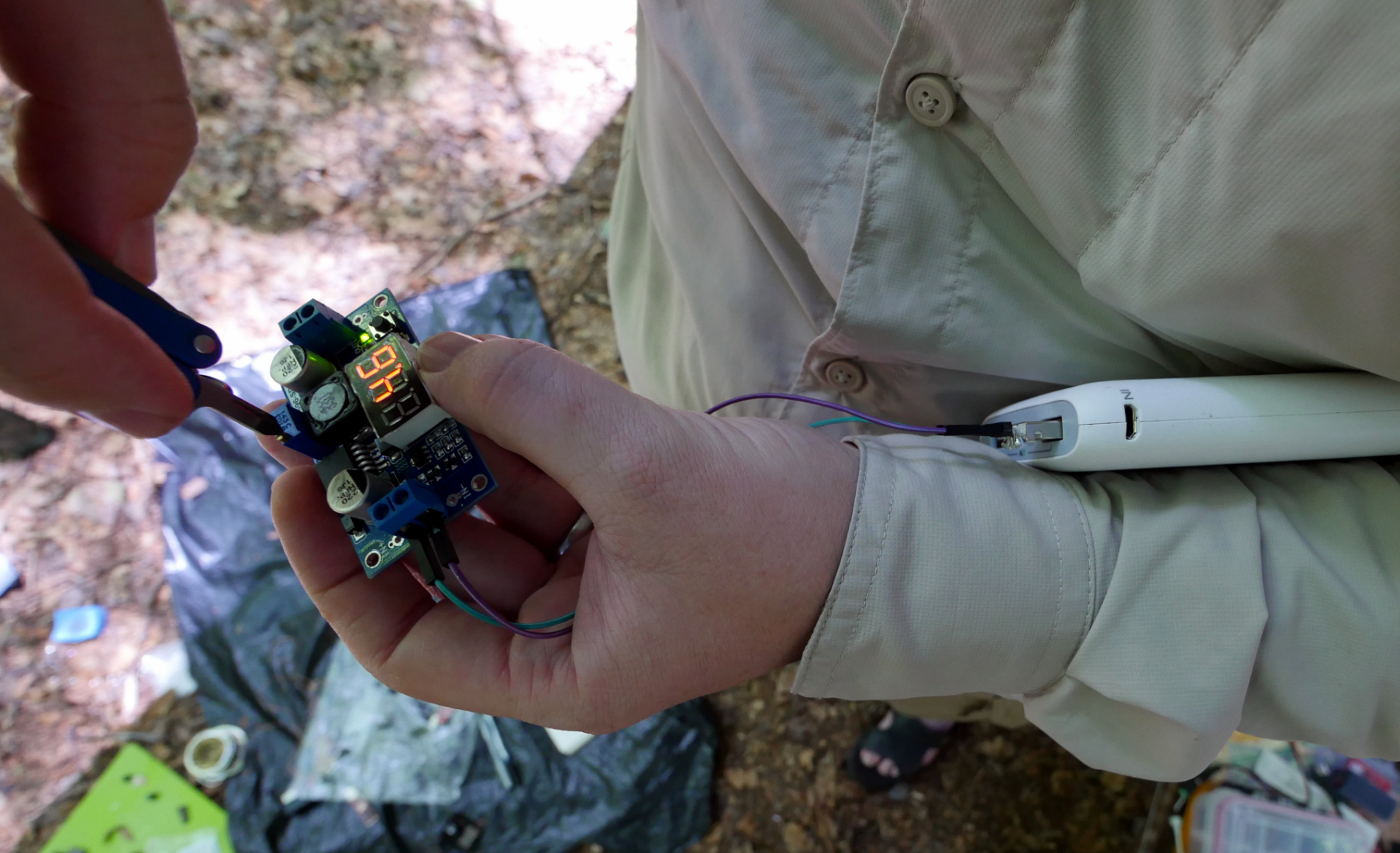
Now for jut $24, I have a slim power pack that can recharge my laptop TWICE!

Part of the experience of hiking in the wild is the dramatic flow of changes in light as you move through the forest. To capture part of this experience we created a cap with photo sensors on it to record the changes in light patterns as we walk. The cap was made before we left for the wilderness.
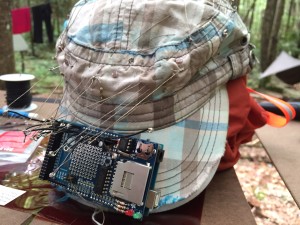
[image of cap]
We created the PhotoSphere with 16 photo-resistors meticulously sewn into the cap. Each photo-resistor needed a 1000 ohm resistor as a voltage divider to be able to extract the voltage changes. A typical Arduino only has 6 analog analog-to-digital converters (ADC). We used an Arduion Mega instead, which has 16 ADCs.
[image of photo resistor circuit diagram]
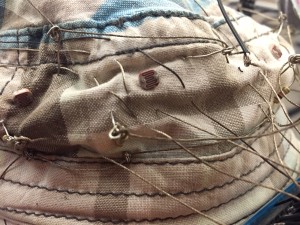
[image of closeup of conductive thread]
[image of wire with loop]
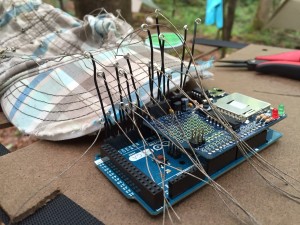
[image of all loops connecting to wires]
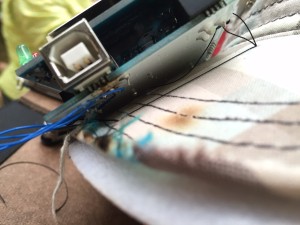
[image of closeup of sewing mega into the
[image of the rtc sd logger shield]
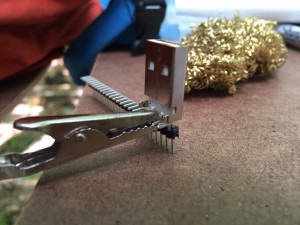
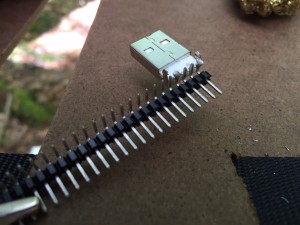
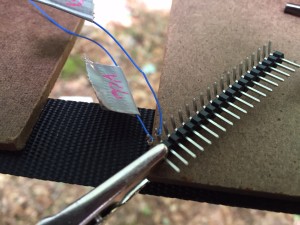
[image of closeup of connector wires]
[image of windows error message for device driver not working]

-Written by Matthew Swarts
The Succession of Trees
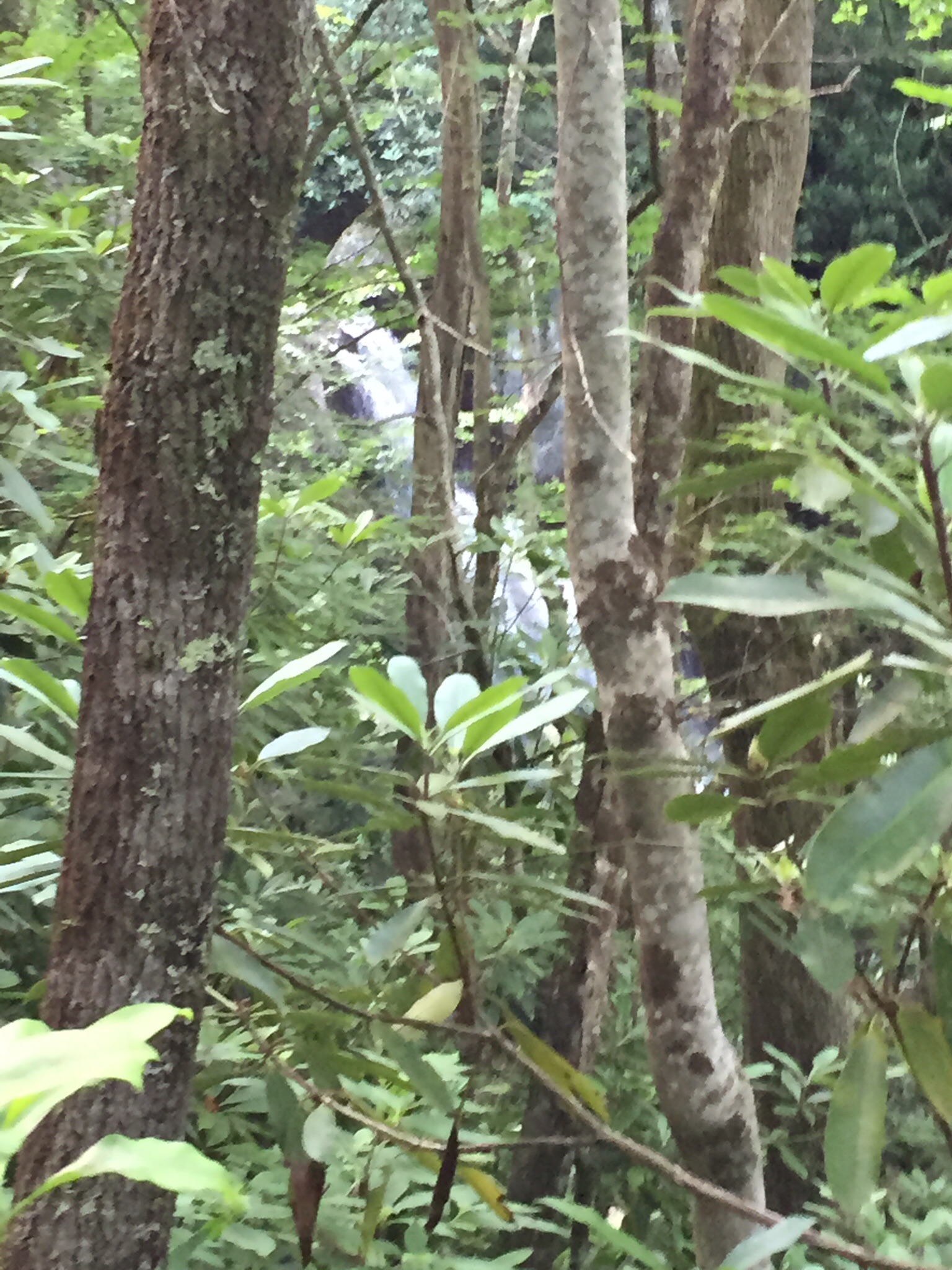
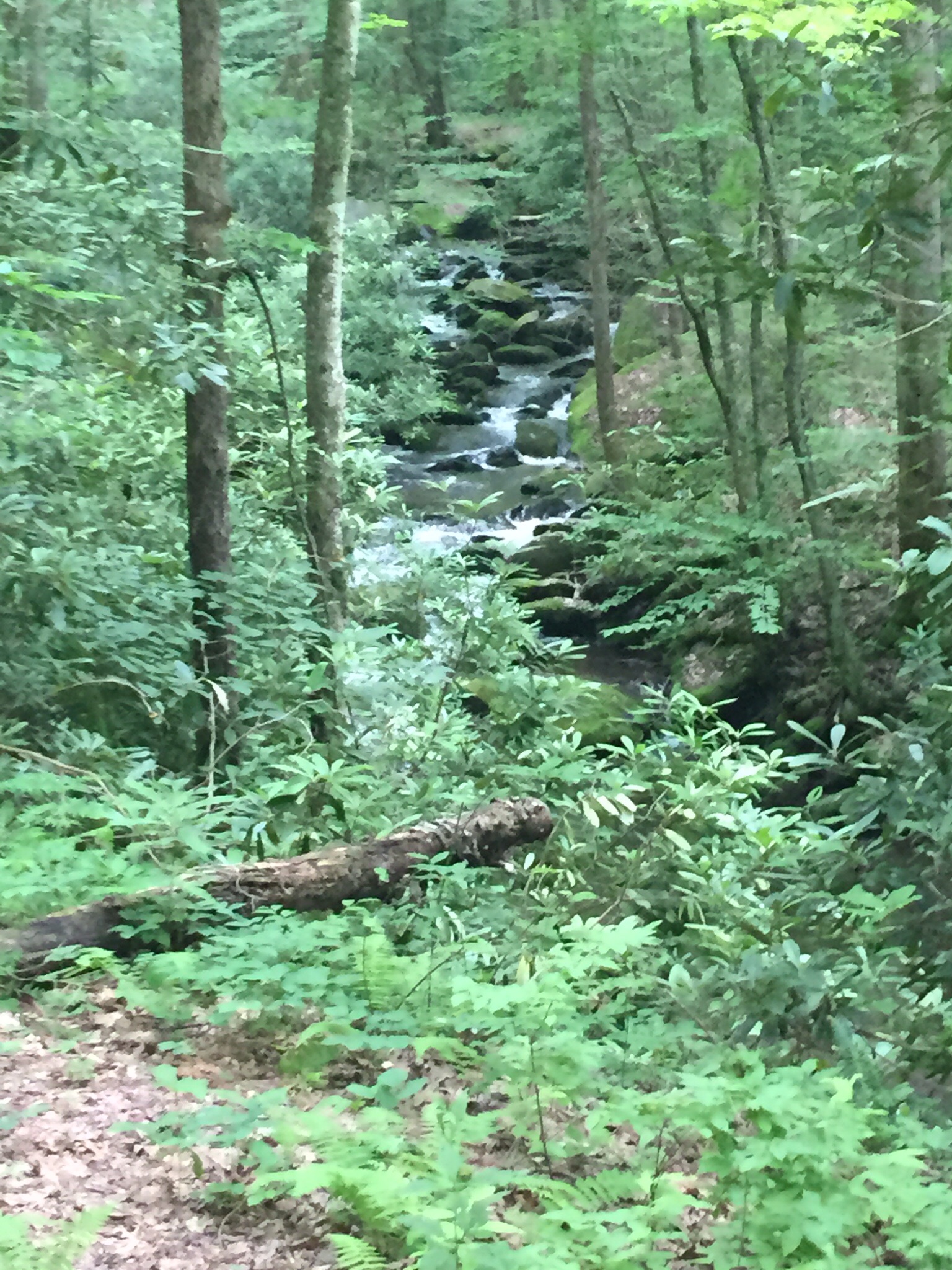
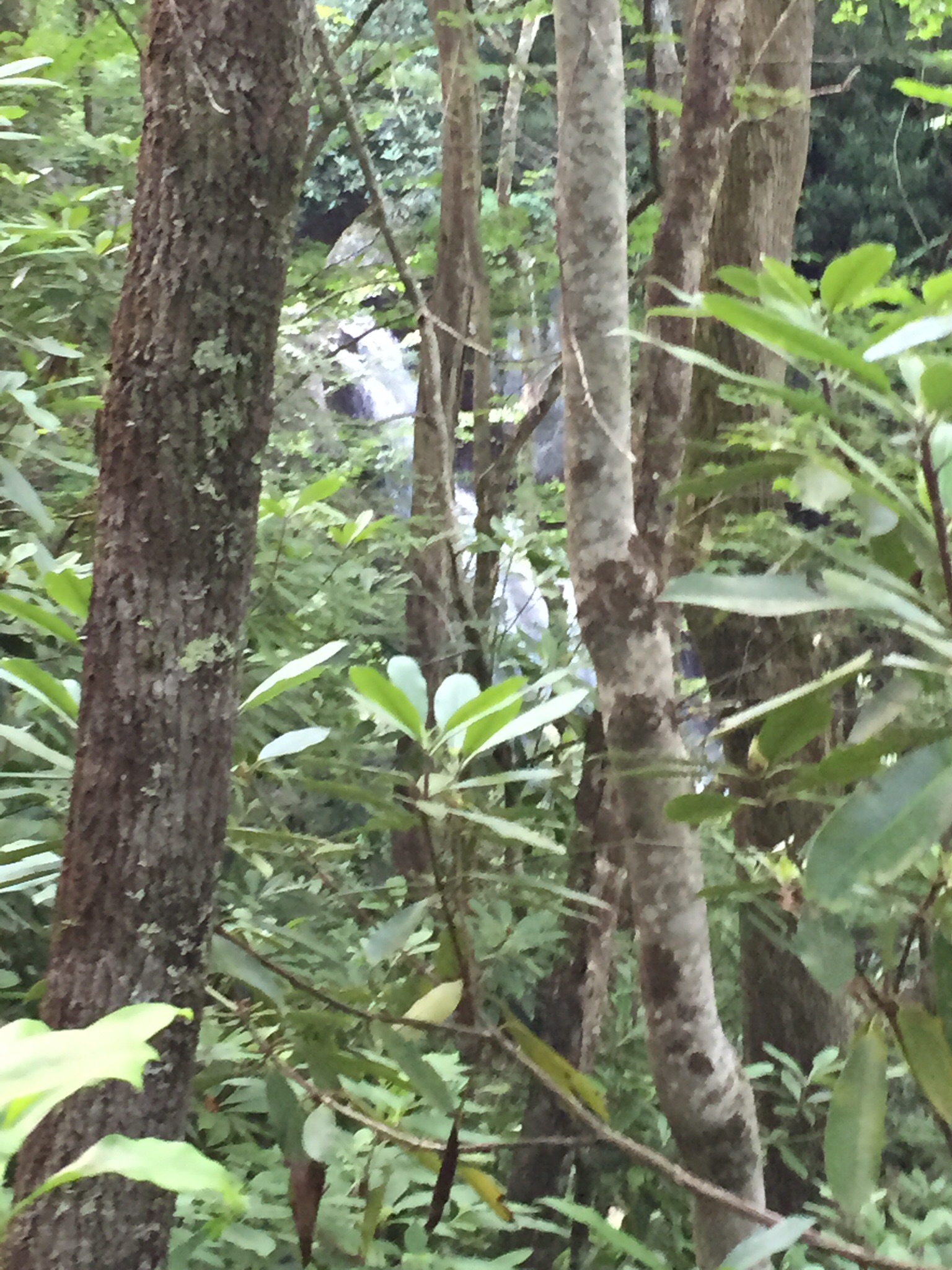
The Tennessee/North Carolina Appalachians are renowned for their diverse tree population, and our trek took us from 4470 feet at Unicoi Gap to the Citico Creek Campground #14 elevation of 1720, providing an altitude-inflected arboretum. Different areas were logged off over the years, so at the higher elevations most were younger than in the lower areas, but of course we benefitted from hiking on old logging roads and a rapidly disappearing railroad grade.
There were the constants– rhododendron forming the familiar Appalachian green tunnel and, at least in these forests, a preponderance of maples. Early we hiked amongst those maples, a few poplars, several species of birch, and what looked like a buckeye tree (though I could only find one rotten buckeye on the ground). What stopped everyone in their tracks were the monumental dead hemlocks. The Wooly Adelgid is rapidly decimating the hemlock population in the area, leaving behind standing dead trunks that still loom ghostly over the surrounding forest.
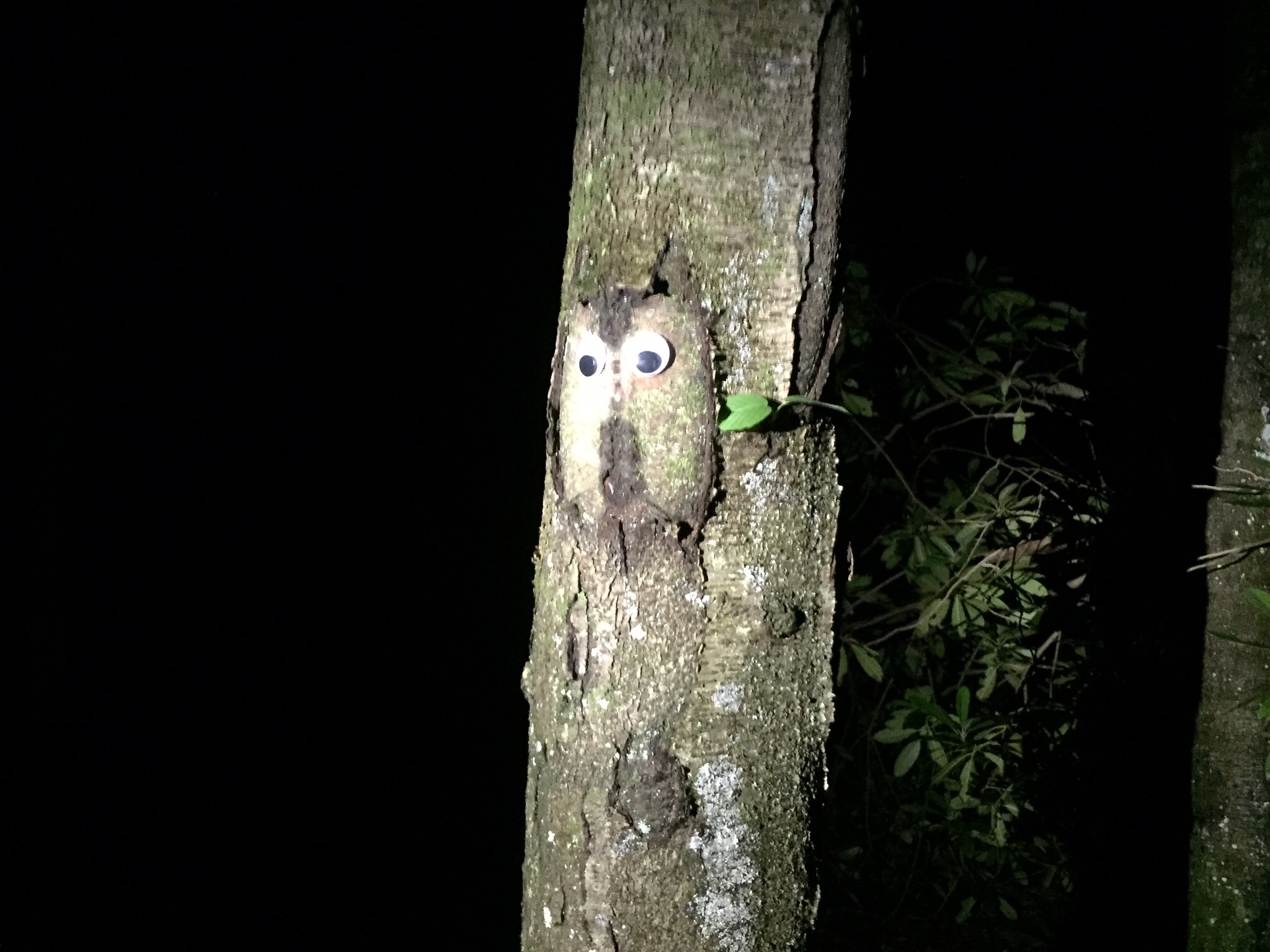
Descending further down were fewer dead hemlocks, along with a number of smaller live ones, the occasional hickory, very large maples, and finally a few oaks (they were noticeably absent higher up). Soon the tulip poplars started to dominate, and around the base camp were the largest in the forest. Turning from the largest to the smallest, there were a variety of club mosses including one which was nearly six inches high, and a lot of stubby Sassafras trees. Located only in our camp was a specimen of the nearly extinct Owl tree (see picture), and just down from the base was another campsite located in a grove of mature beeches–the light, filtered through the leaves, was the greenest of green.
Hugh Crawford
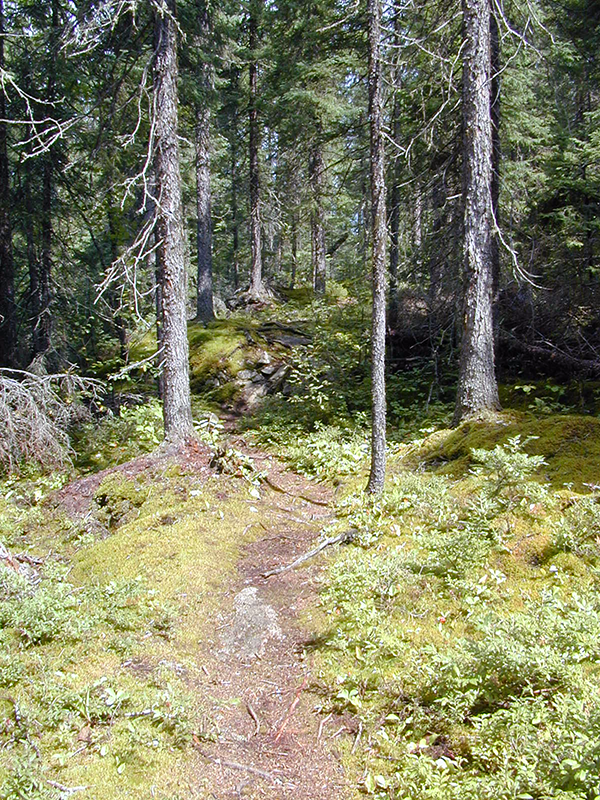
I love moss. I really do. I love moss so much that I can’t help but write about it. Moss is indeed one of the Great Things. 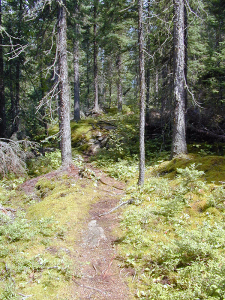 Moss is like a sedative and its porous structure imparts such a stillness to its surroundings that the sound it absorbs seems to manifest as a physical presence. It’s as if moss must consume sound in order to survive. Moss loves dampness and decay and the forests of Citico Creek provide an ideal substrate for huge bryophytic colonies. A porous absorber, moss converts a minuscule portion of the acoustic energy it consumes into heat. Dispersing that heat as waste is perhaps what make moss seem so cool.
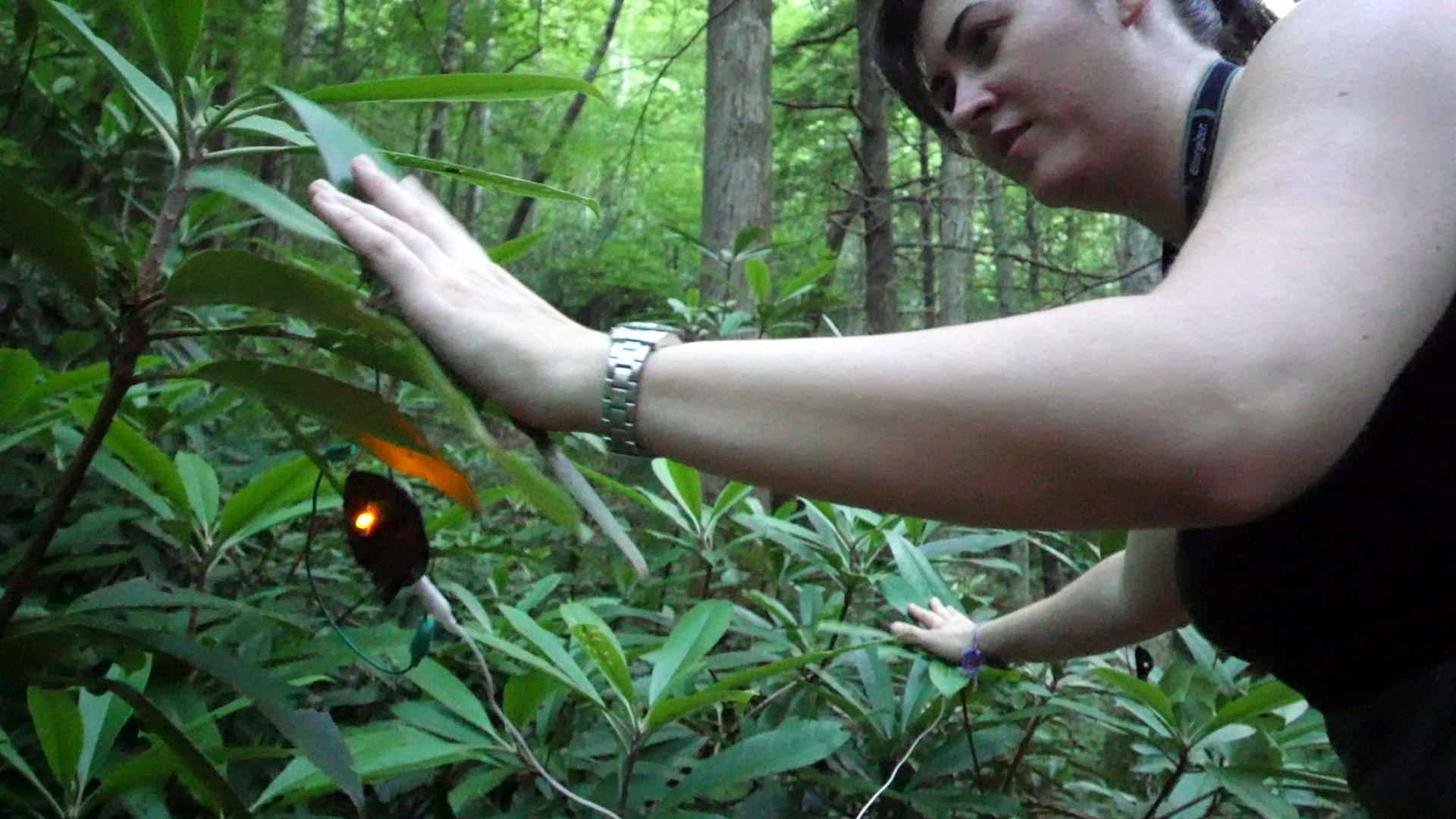
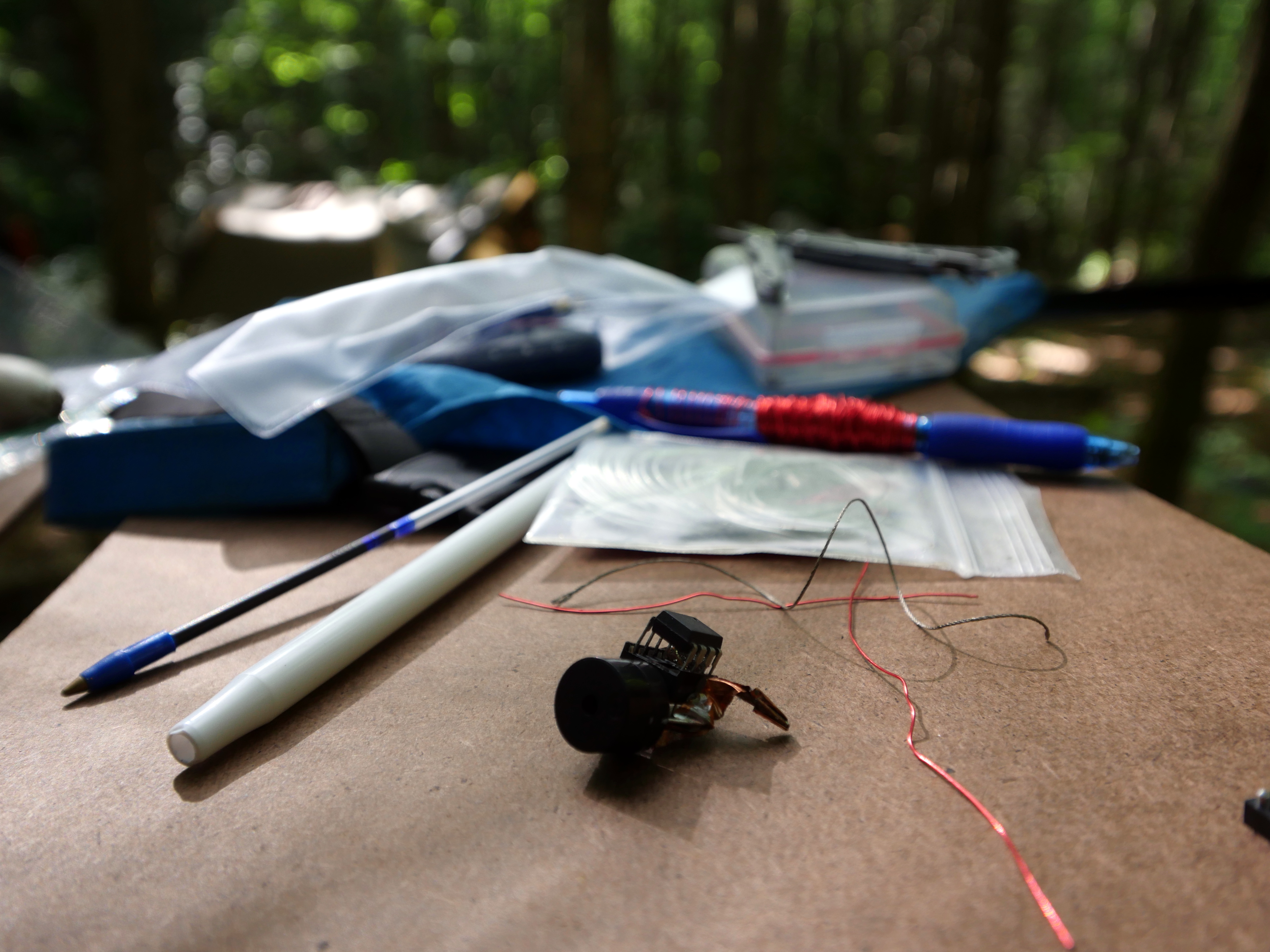
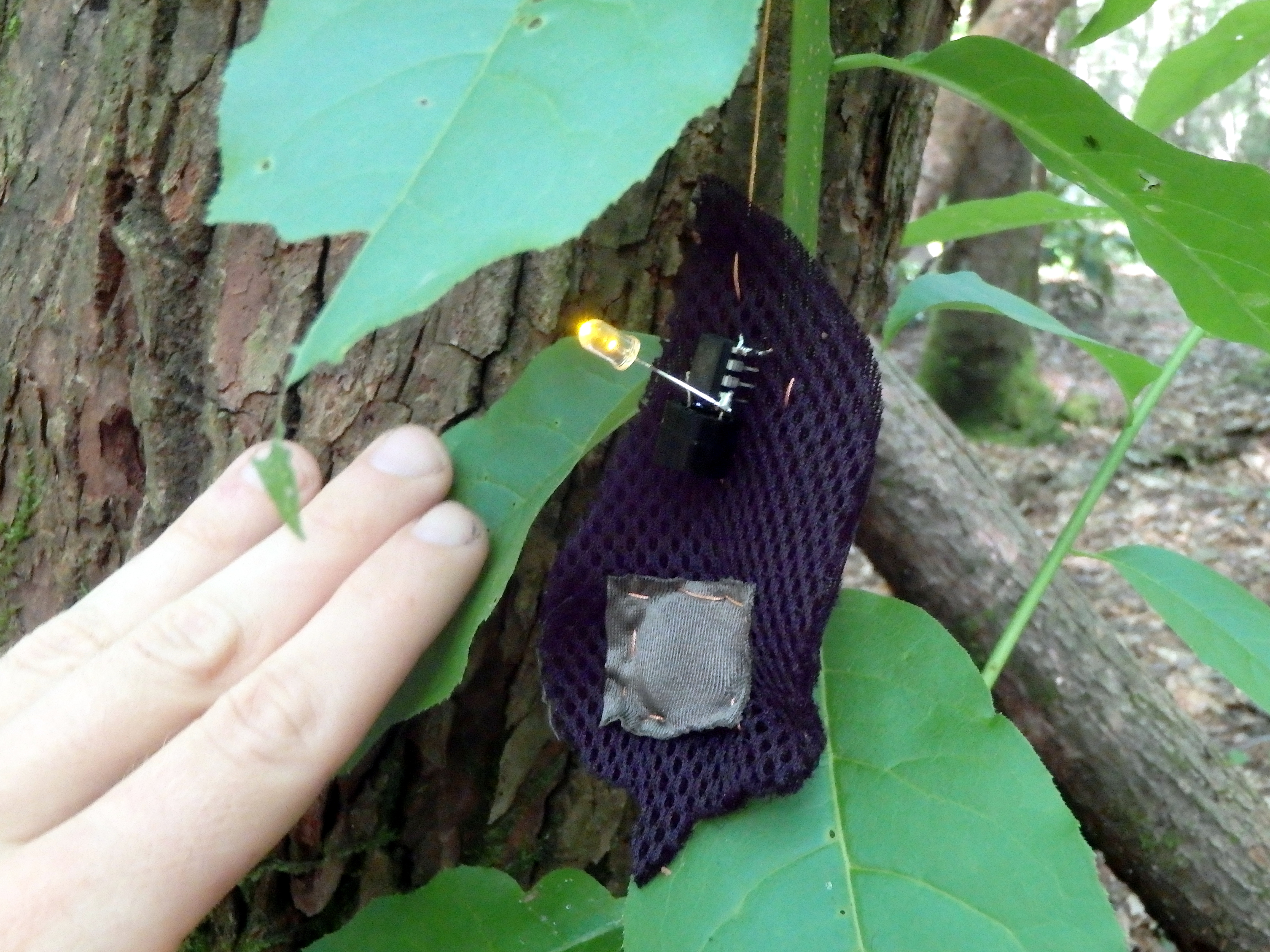
OLYMPUS DIGITAL CAMERA
OLYMPUS DIGITAL CAMERA
OLYMPUS DIGITAL CAMERA
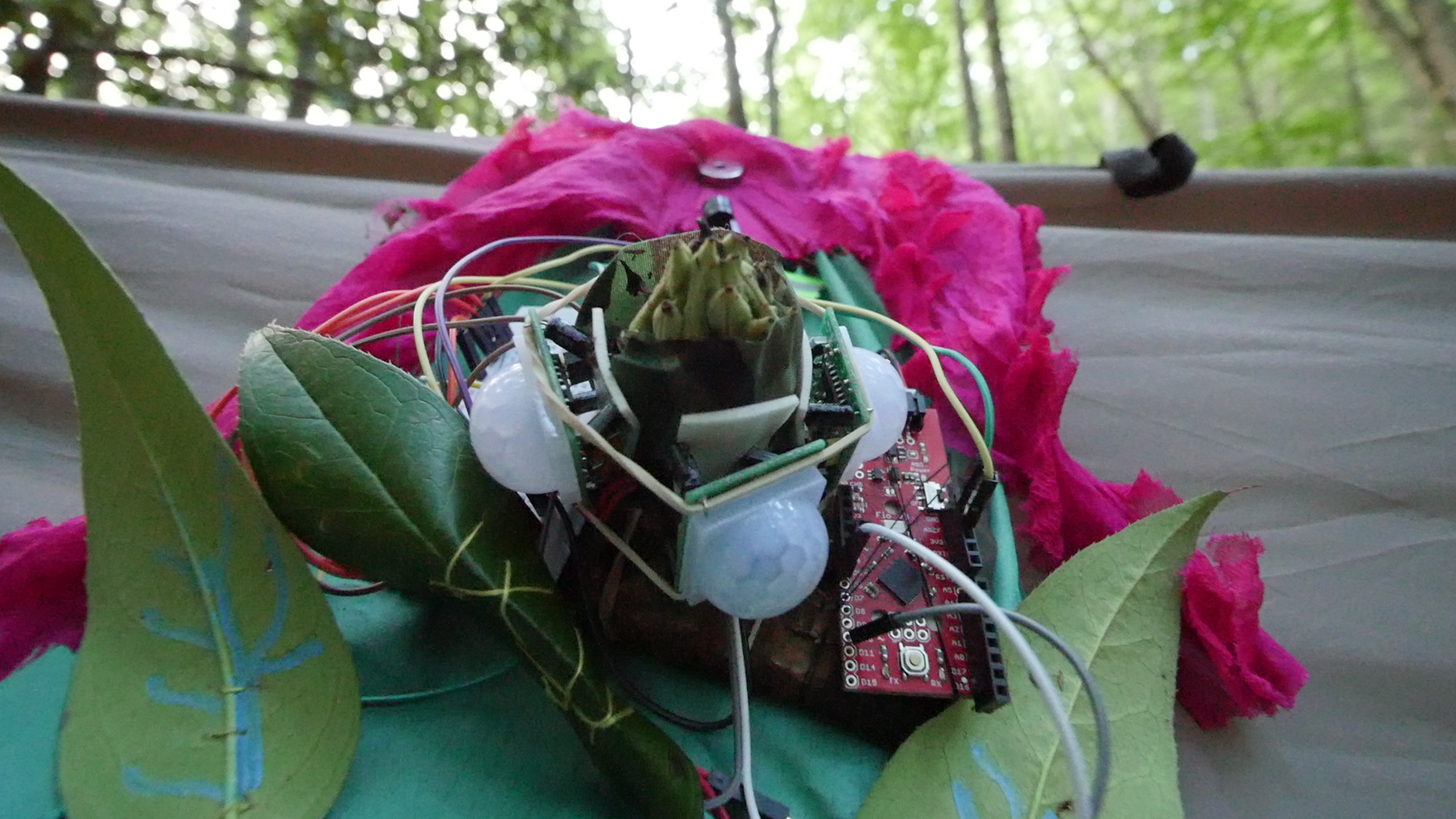
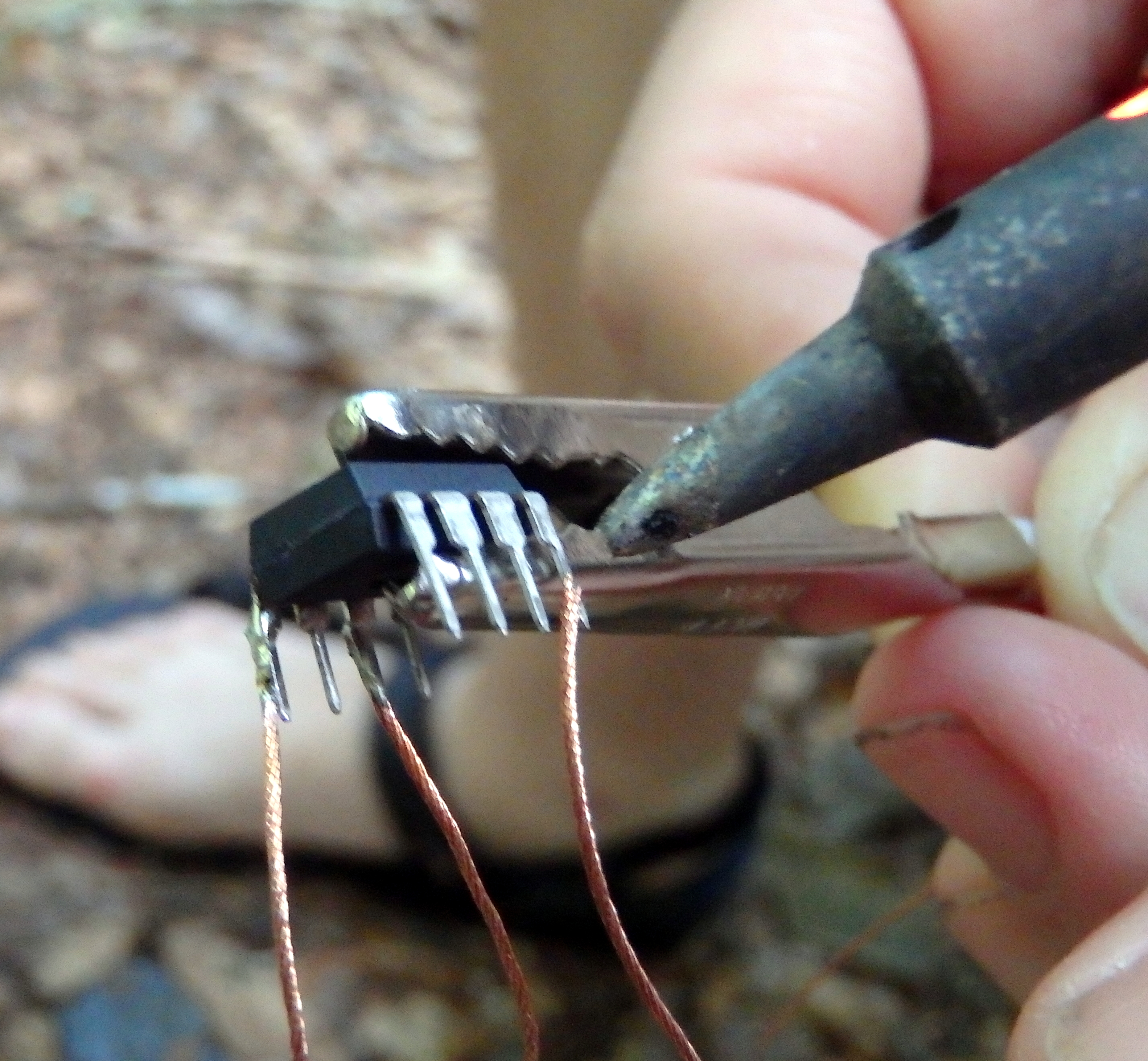
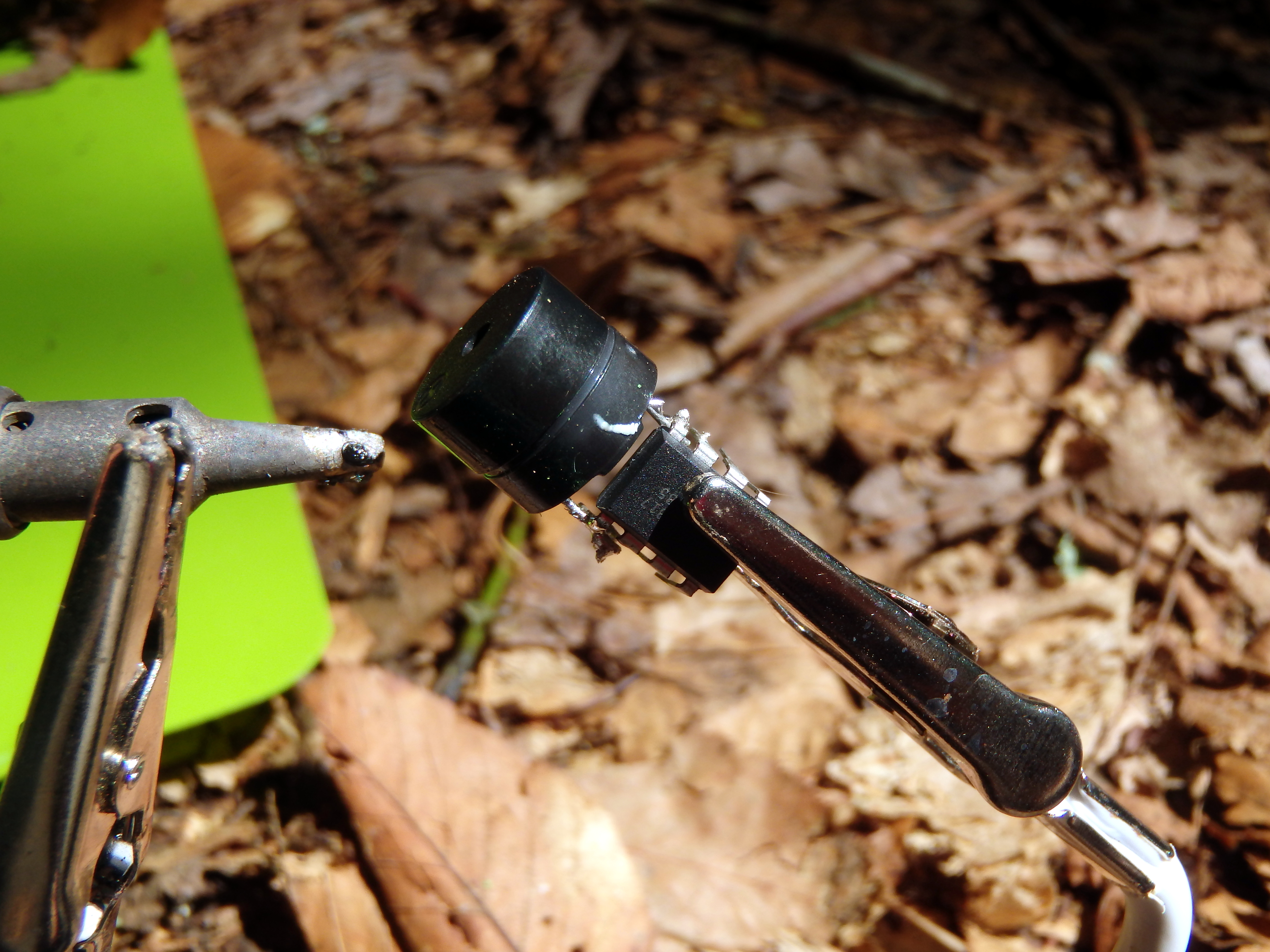
Context: First, a report that a young boy was lacerated by a bear in a forest near us and a suggestion that we build a bear detector. A week before, JY learned how to solder and program an arduino to make an LED blink like one of the firefly species. A day before, she got 2 servo motors to shake a noisy shiny piece of mylar. We took these starting points from the lab into the forest: NFCCDL: North Fork Citico Creek Digital Lab.
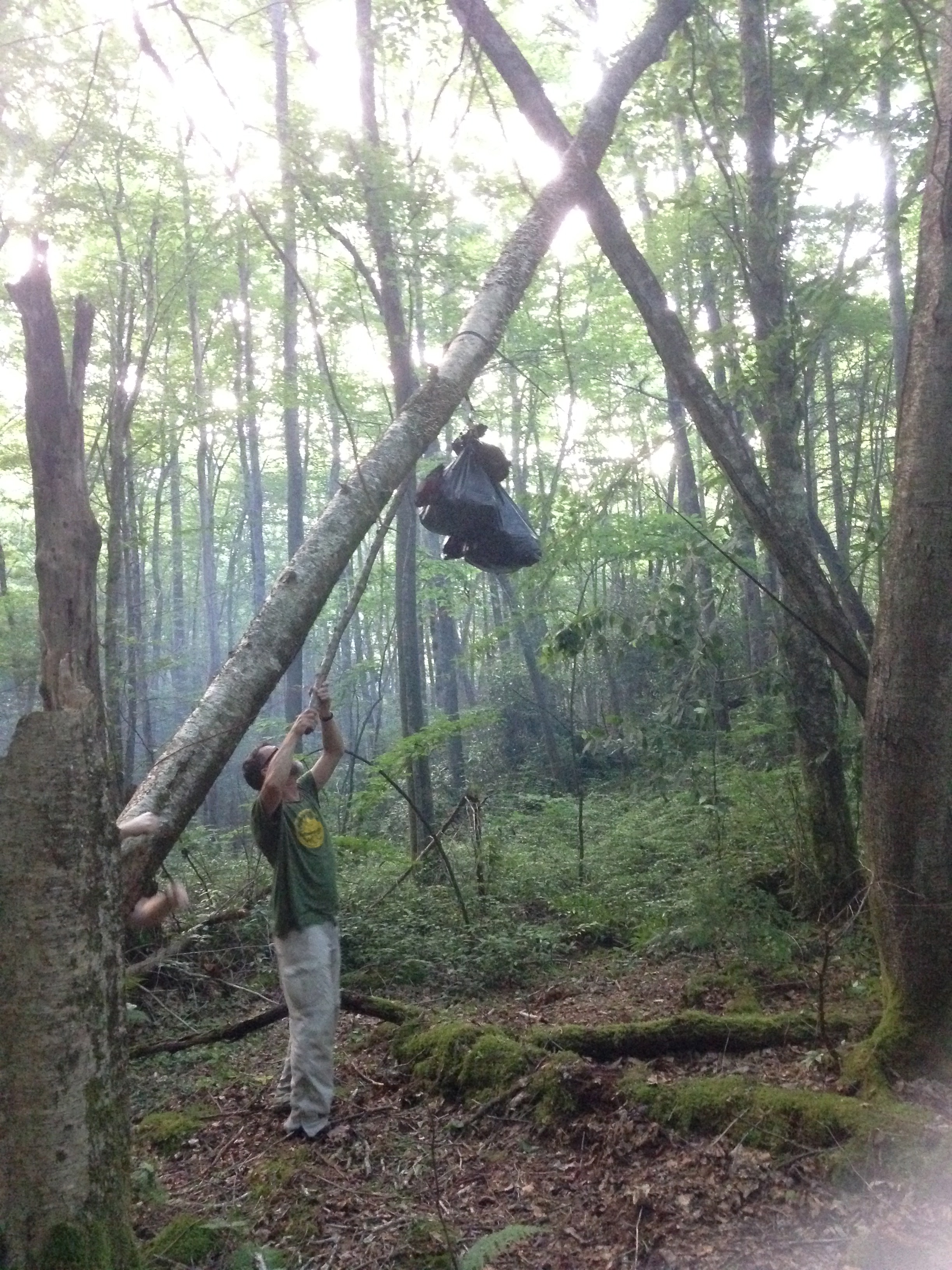 bear bag is placed away from camp
Constraints:
Marketability: In the forest, product took a practical side, shifting from an alert of mere presence of a bear to a lightweight, compact attachment to a camp tent to alert the camper.
Capability: Need to see all around so need to figure out how to station the system on the peak of tent to expand the perceptive field. There is no need to know direction, only presence.
Interaction with nature: design an output that would scare a bear.
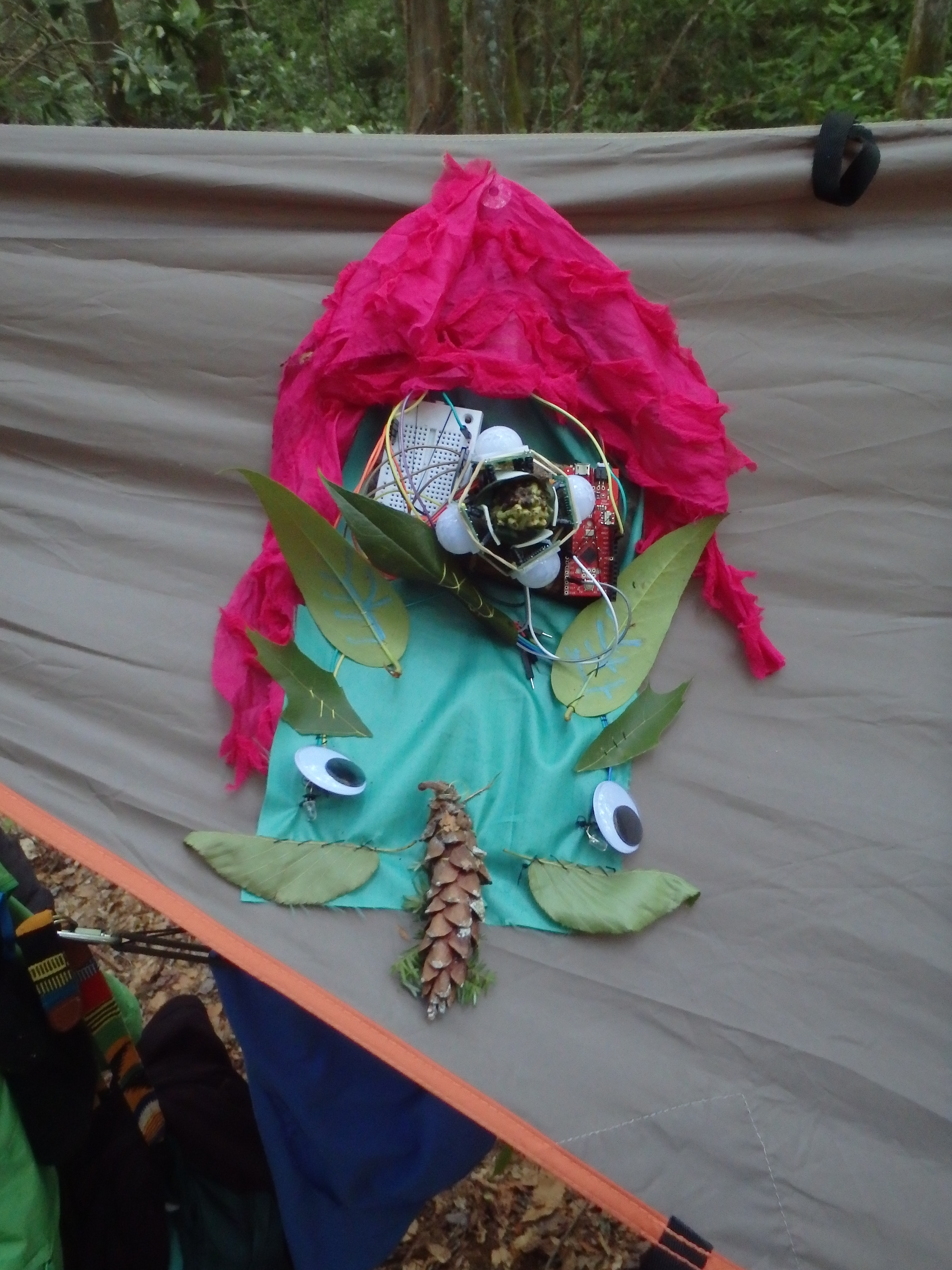
Functions:
Detect the presence of a bear near the tent.
Wake up camper inside tent.
Simultaneously, start up a set of blinking lights in shape of eyes separated by a distance to signify a large size that could scare a bear.
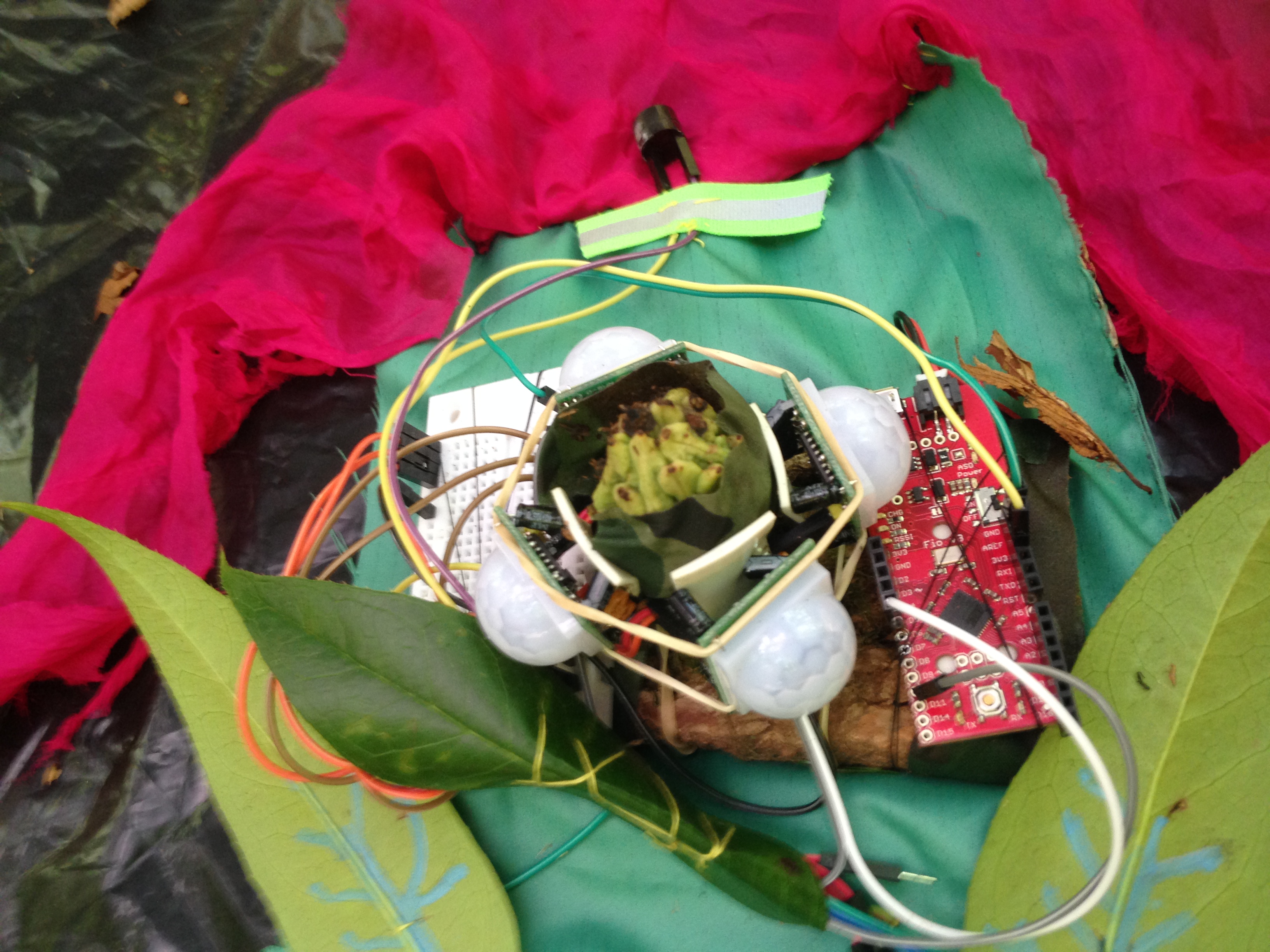 input: sensing system 4 motion detectors
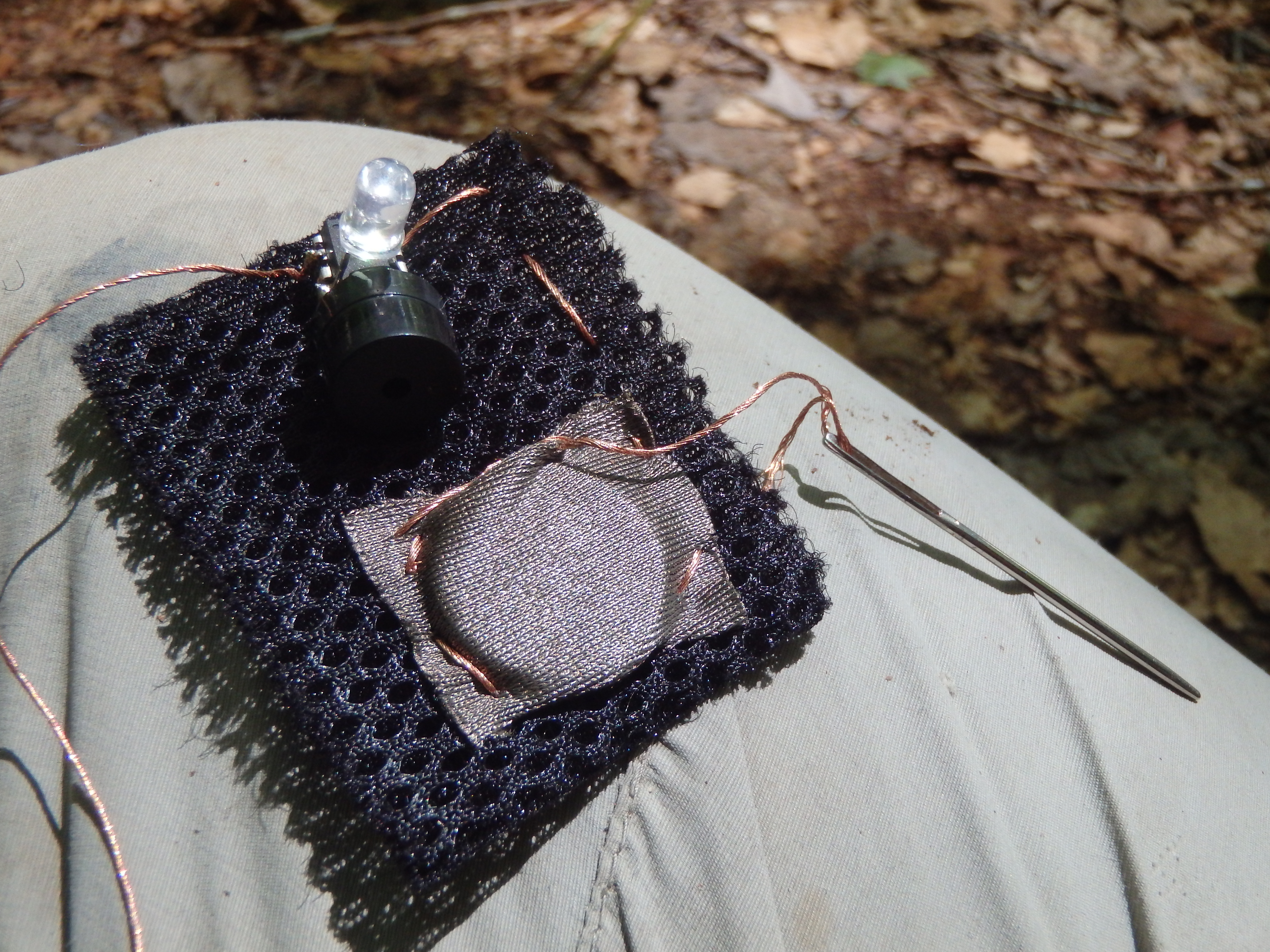
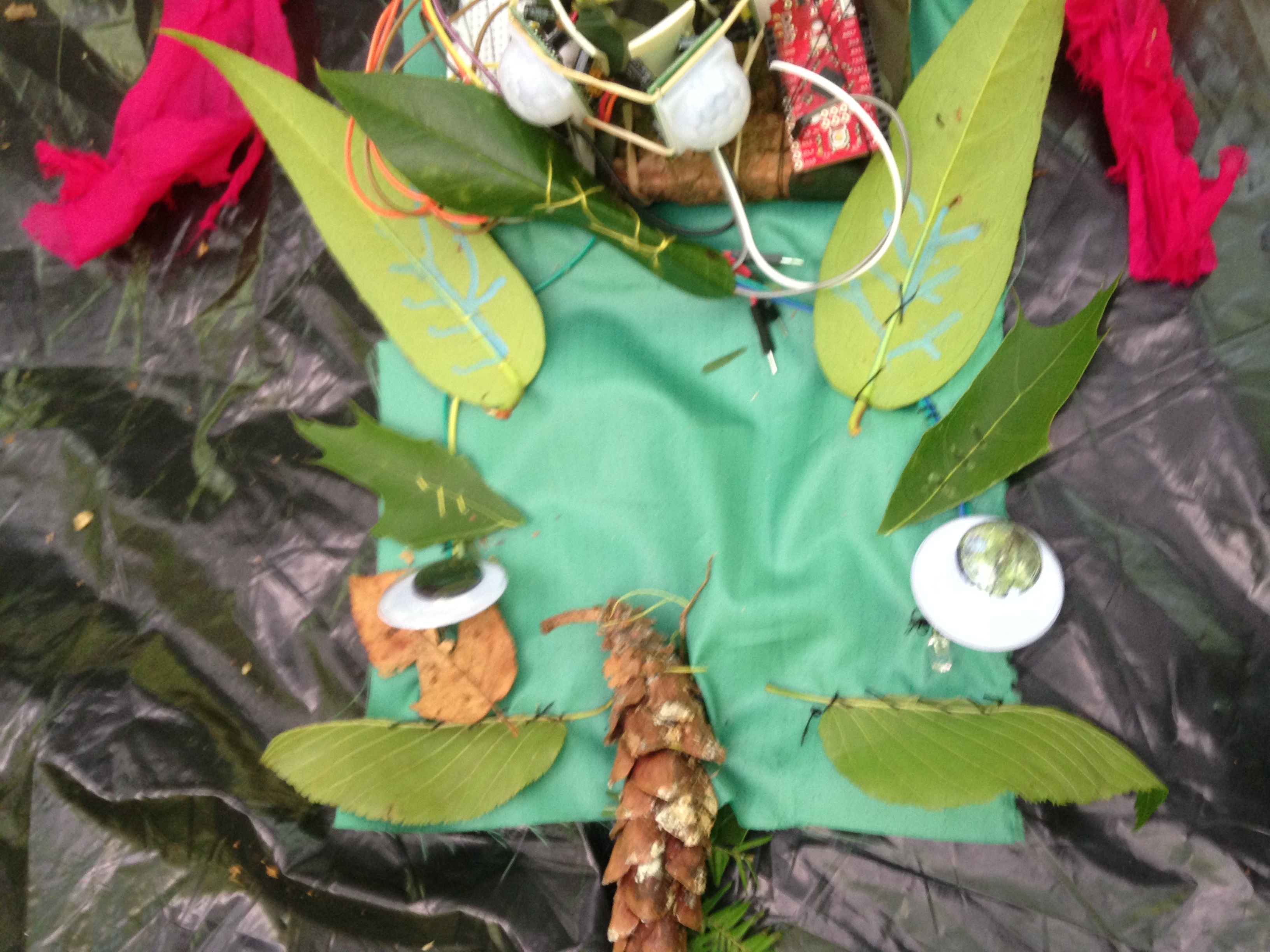 output: LED to scare bear and buzzer to wake camper in tent
Materials:
Input: 4 Motion detectors, range of 20 ‘ and 90 degree cone of detection.
Control system: Arduino, breadboard, battery pack
Output: LEDs, buzzer
Production:
Make a 3D attachment site for sensing system: a magnolia bud that smells like oregano.
Make platform for control system: a flat piece of oak bark
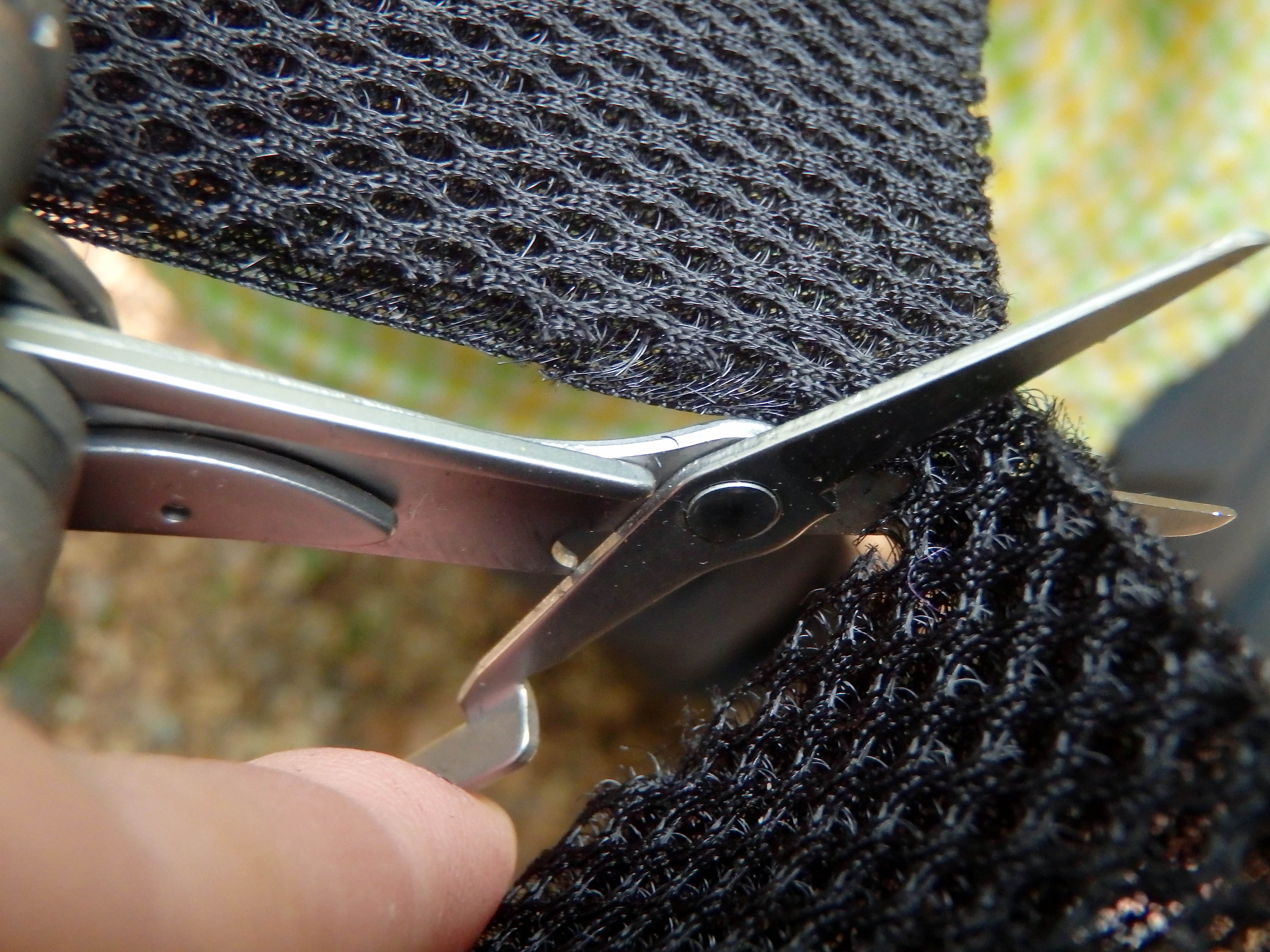
Get output to appropriate locations: long lead for buzzer to inside tent, 2 leads to scary LED eyes sewn onto a fabric with face-like decorations to hide wiring.
Programming a scary message to a bear: flash out SOS in morse code on LEDs and wake up camper with a buzzer using same program.
Attachment to tent: used set of strong magnets
BOB SOS in place on hammock tent tarp
Presentation:
Incident: unaware of a bear attractant still remaining within the tent
Bear approaches and is detected.
Camper is alerted and bear is scared off by illumination system.
2nd prototype:
Simplify attachment to tent.
Test whether bears are scared by flashing lights that look like eyes of something bigger than themselves.
[ADD PERFORMNACE
Jeannette Yen-
Scientists often rationalize that our advancement of knowledge is equal to the costs of the lives of living organisms. It isn’t. I took disdain at this idea.
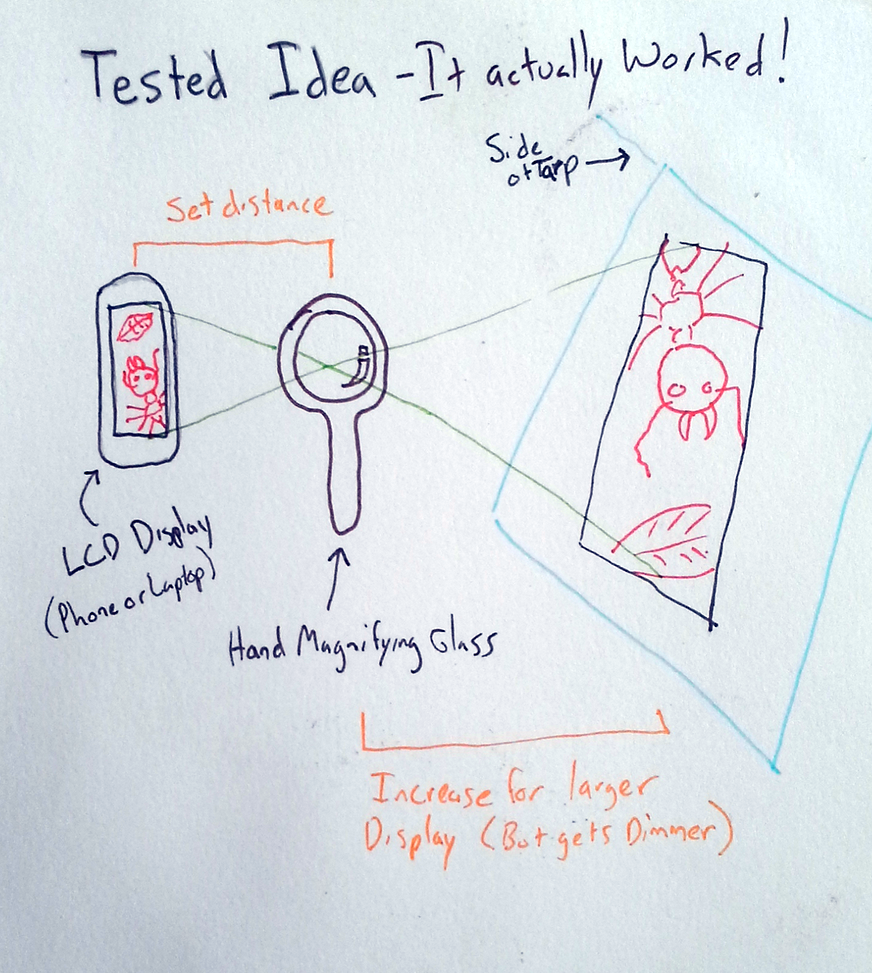
Instead, with the advances in modern high image resolution in time and space of the digital age, we now can produce large magnified images that are comfortable for humans to view. This gives us the ability to observe living creatures in the wild without disturbing the community. One of the items I’d like to carry in the backpack would be a compact projection/image recording system: a vellum-like sheet onto which a lit Fresnel lens could produce a crisp magnified image so we could see the part of nature that is smaller than trees and birds. The camera looks into the lamp by focusing on the back of the image screen. Therefore the lighting doesn’t have to be super bright.
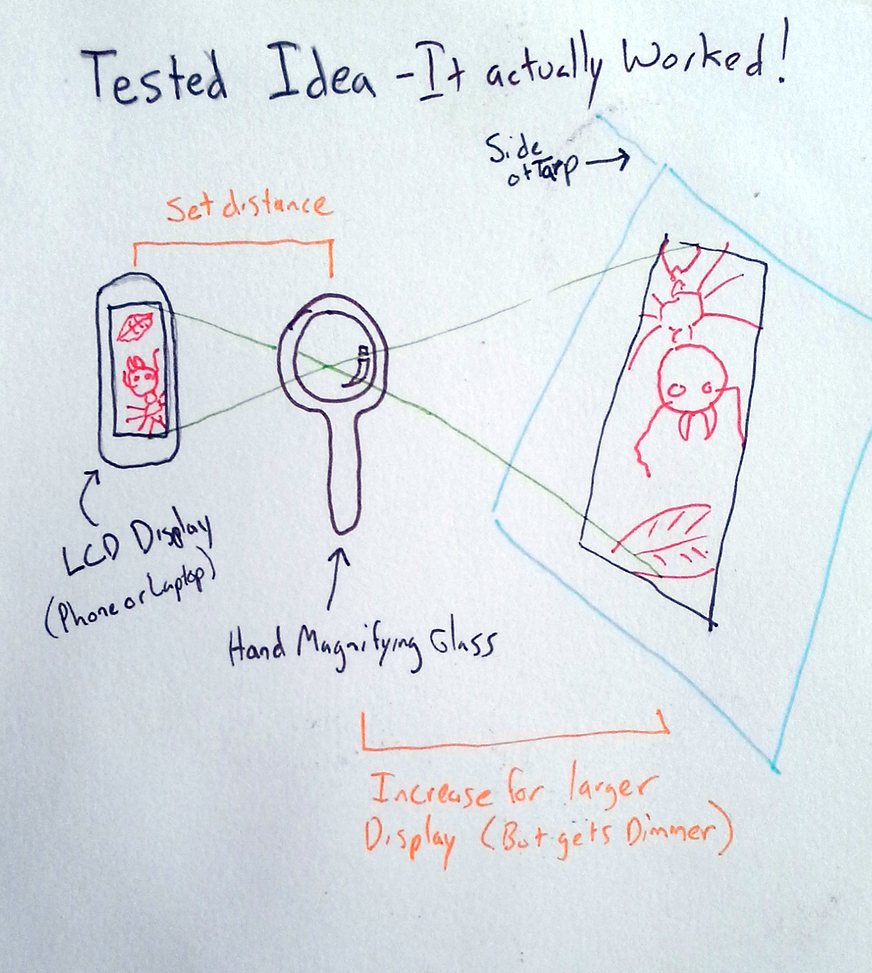
To my surprise, we actually did try to set up a projection system. It totally worked! It was too dim to easily take a picture of with a camera, but in the dark forest, it was awesome to share a picture, or video at a large scale for many people to check out at the same time!
Maybe the mountains imprinted themselves in my dad’s DNA during his childhood in South Korea, and those highland genes are what always draw me to the spectacular sights and sounds of southern Appalachia. While camping in Joyce Kilmer National Forest, I was completely awed by all the life that was around us, and the cool, clear weather during most of our trip allowed us many opportunities to enjoy the incredible array of flora and fauna near our idyllic base camp by Citico Creek.
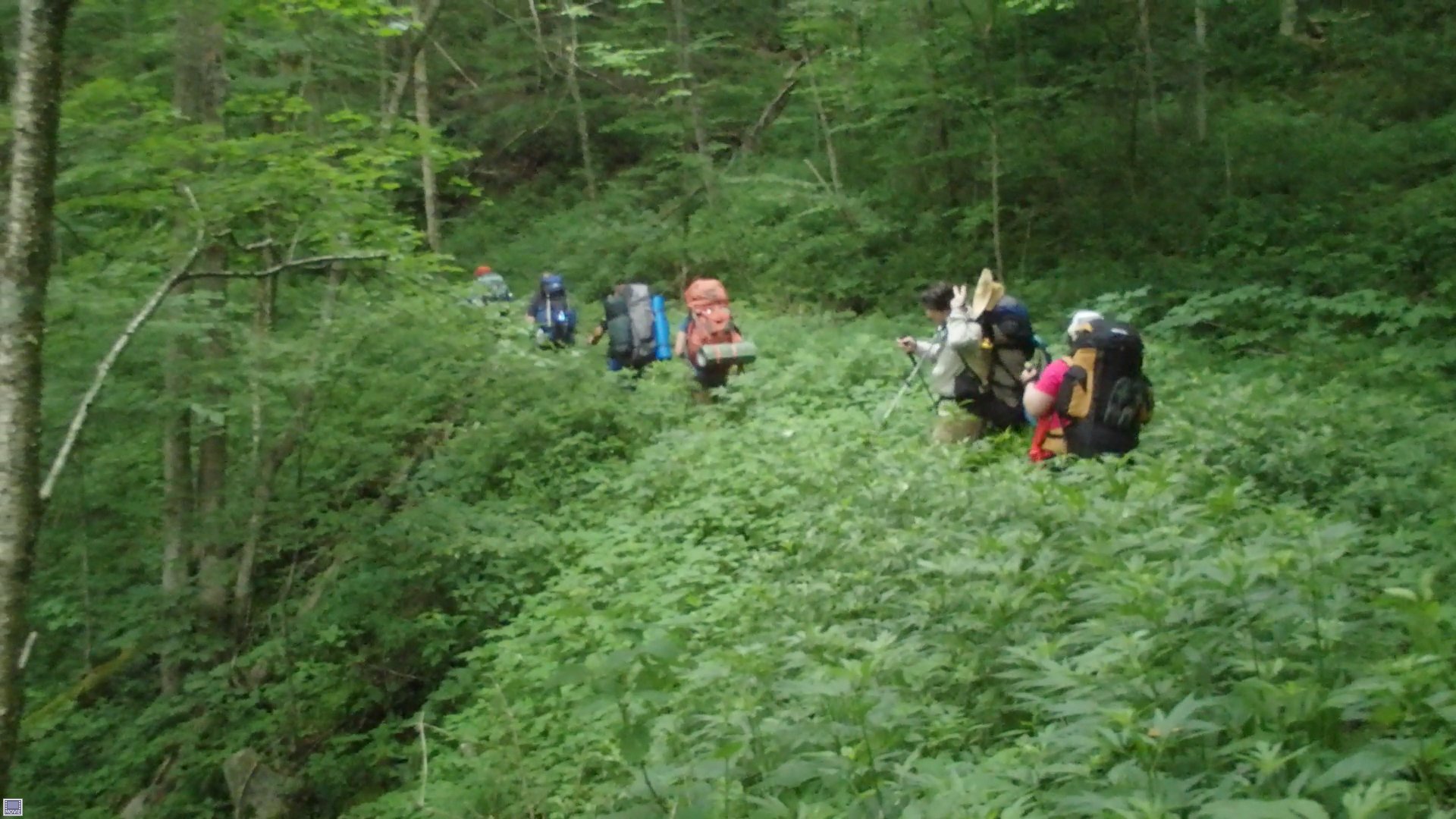
Hiking in TN mountains
While the 6-foot tall Hugh was contemplating the taller trees in the forest, those of us closer to the ground had our eyes focused on the plants near our feet. The pipsissewa, or striped wintergreen, had white berry-like buds and were just beginning to bloom. Traditionally, the leaves have been used medicinally for ailments ranging from rheumatism to kidney problems. The plant does have antiseptic properties and is still sometimes used as a flavoring for candy. We had just missed the lady slipper orchids and only saw the spent inflorescence, but we were too early for the rattlesnake plantain orchids. There were a few Indian ghost pipes, which are named for their white, nearly ghostly appearance due to the lack of chlorophyll. The wildflowers were growing amongst the groundcover of partridge berries surrounding the trees.
Appalachian azures
Around the edges of the base camp were young sassafrass, which attracted black swallowtail butterflies. There were also a few silver spotted skippers. Both of these species, however, were greatly outnumbered by the Appalachian azures that congregated around our site like a gathering of forest fairies.
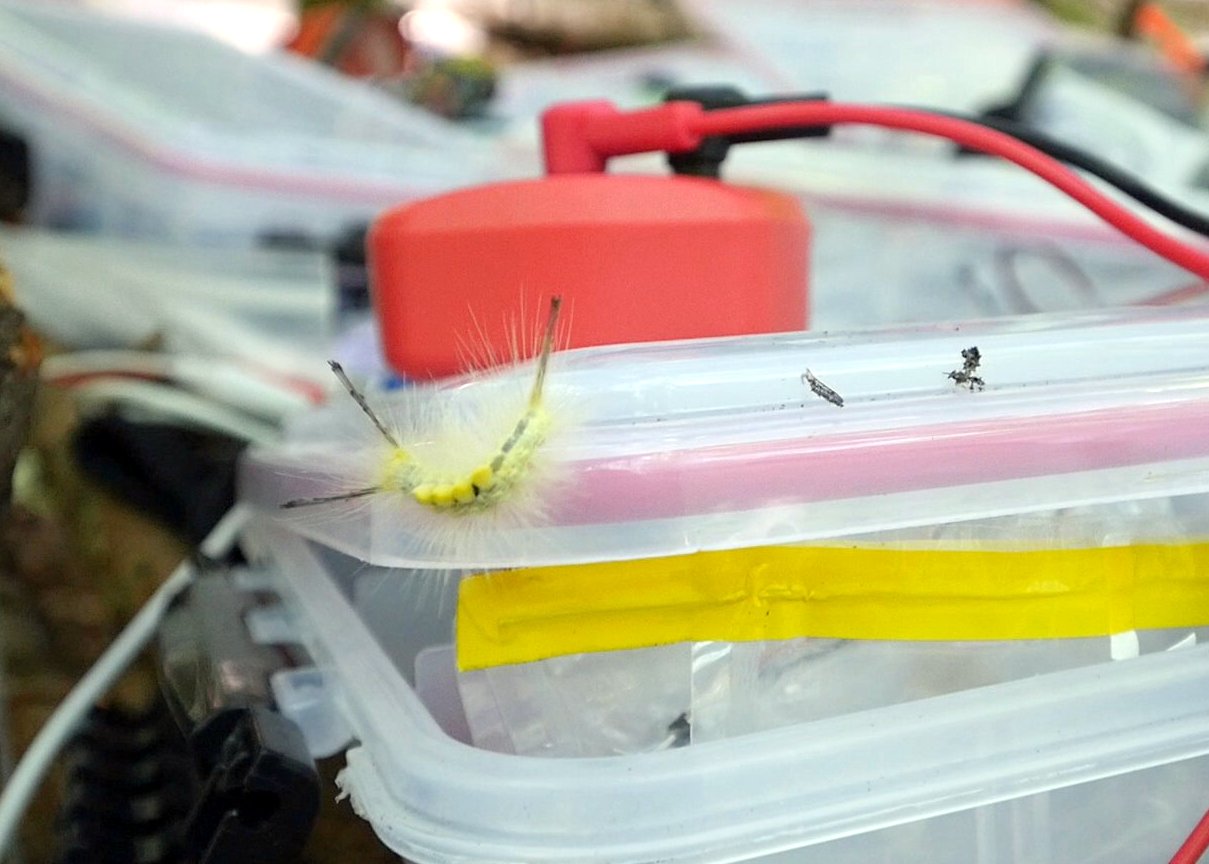
Definite tussock moth caterpillar
Our more earth-bound neighbors included a definite tussock moth caterpillar that had yet to earn its wings. On the first day, we had picked up an oil beetle using a stick and managed to avoid the chemical it secretes to cause blisters on menacing predators. Shiva named one of the queen crater snails in our camp “Squickie” and its leopard slug cousin “Slickie.” Andy preferred the colored flatbacked millipedes and the giant North American millipedes, whose defense mechanism is to secrete a chemical containing cyanide, faintly scenting them of almonds. I came to think of a large fishing spider that lived in the dead tree above my head as my pet away from home.
Oil beetle
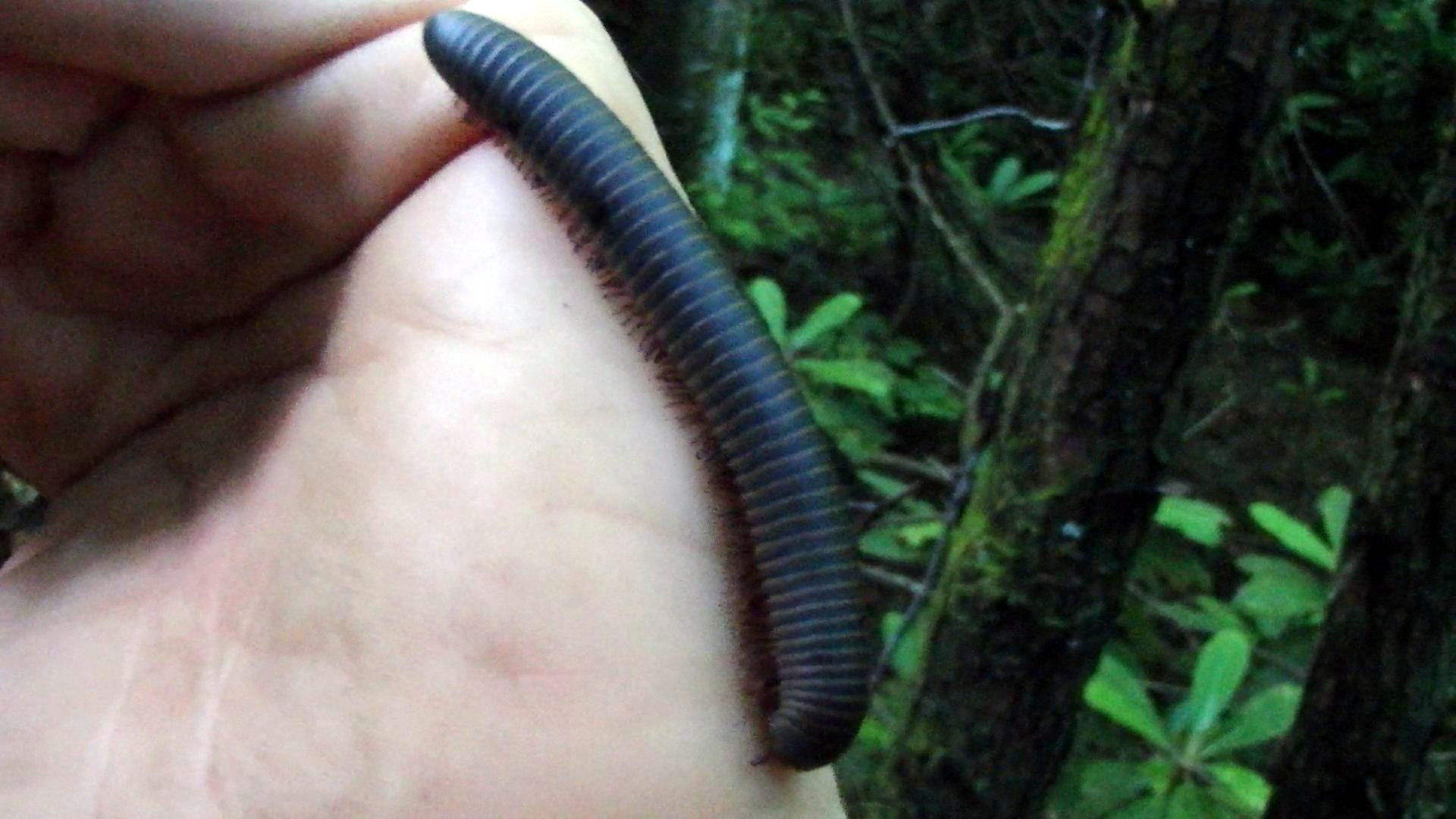
North American millipede
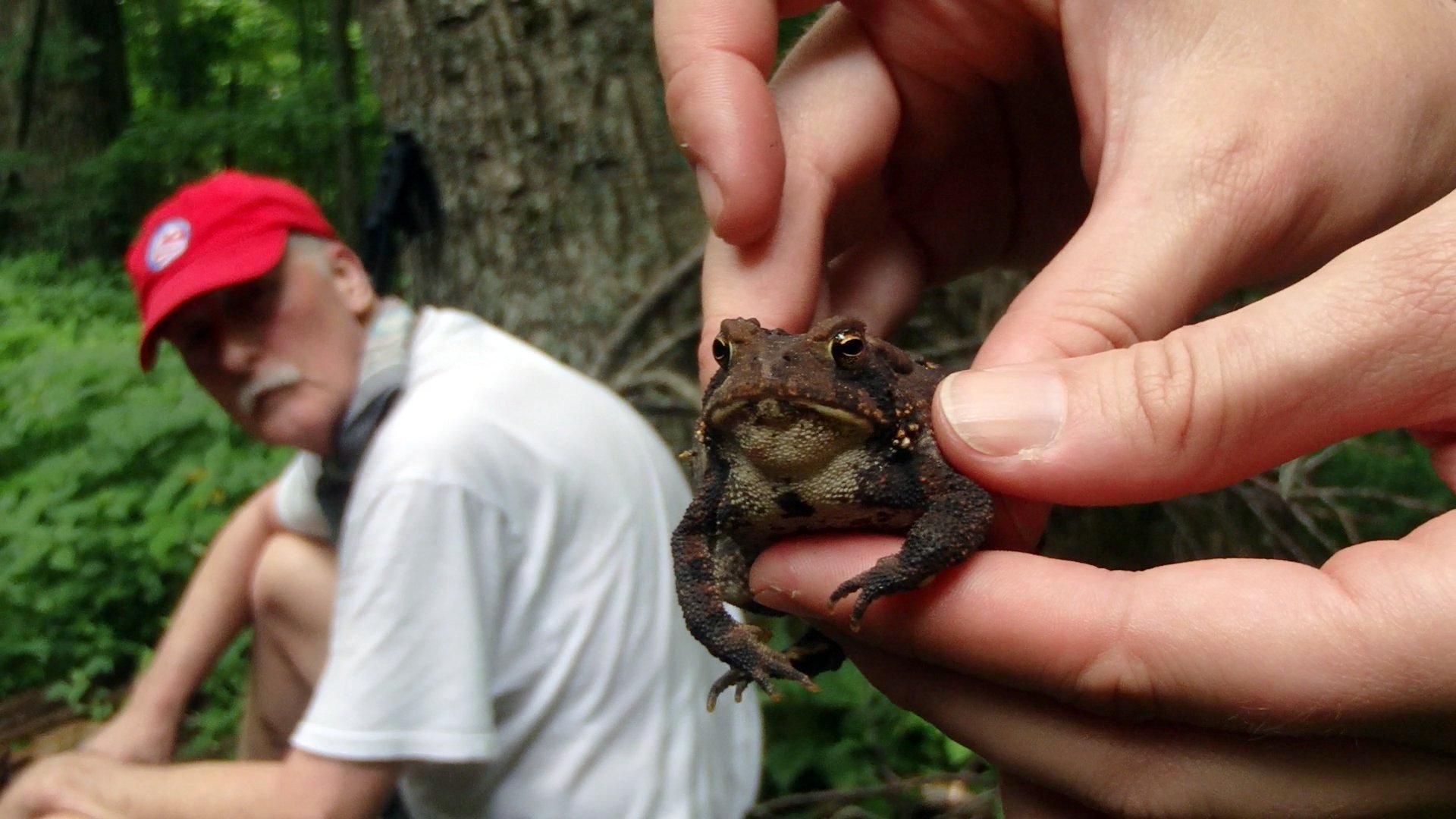
Although Shiva and I had some perturbed mammalian visitors by our tent on the first night hiking to the campsite, we didn’t spot as many vertebrates near our home base as we expected. We did hear a variety of birds: sapsuckers, a barred owl, red-breasted grosbeaks, cardinals, sparrows, wrens, chickadees, and warblers, including the black-throated green warbler whose mating call sounds like the Teenage Mutant Ninja Turtles theme song – “Heroes in a half shell!” Laura caught a Southern toad on the trail, and Andy and Shiva startled a rattlesnake on their afternoon run. In the water, I managed to catch one of the smallest salamanders in the world, the pygmy salamander. It was so translucent that you could see all its internal organs and its beating heart.
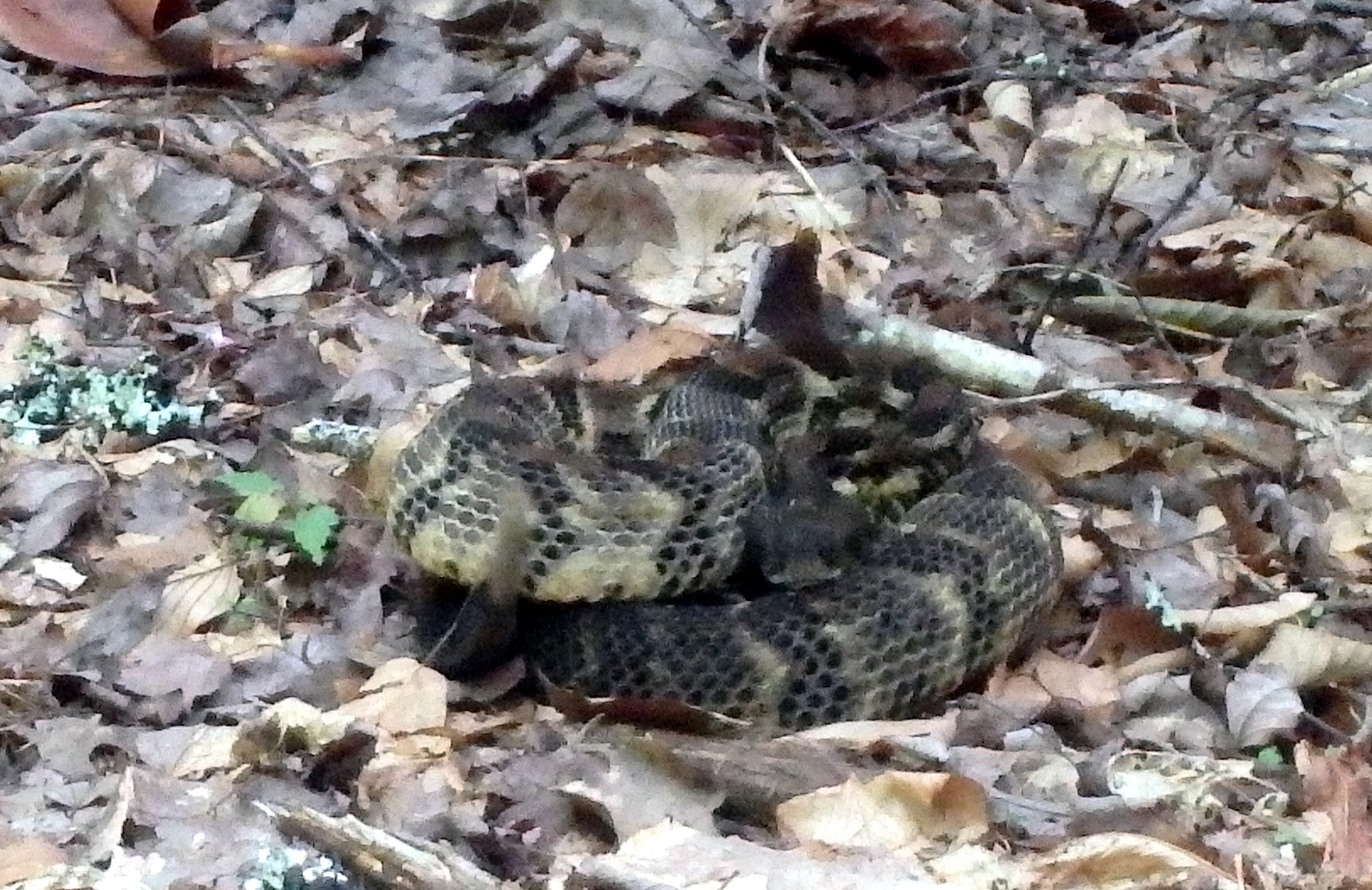
Timber rattlesnake
Southern toad
While wishing for someone with foraging knowledge to prepare us a camp meal, we came across some chanterelles a quarter of a mile from camp. After scaring ourselves with horrific fungus poisoning stories, we left the chanterelles in the forest to decompose the decaying matter around them. The damp conditions were perfect for the toadstools, shelf fungi, and coral fungi. Their fellow decomposers, slime molds, also populated the fallen rotting trees. The log outside my tent became covered in white, marshallow-like poufs almost overnight. Other logs were covered in slime molds of various shapes, colors, and textures.
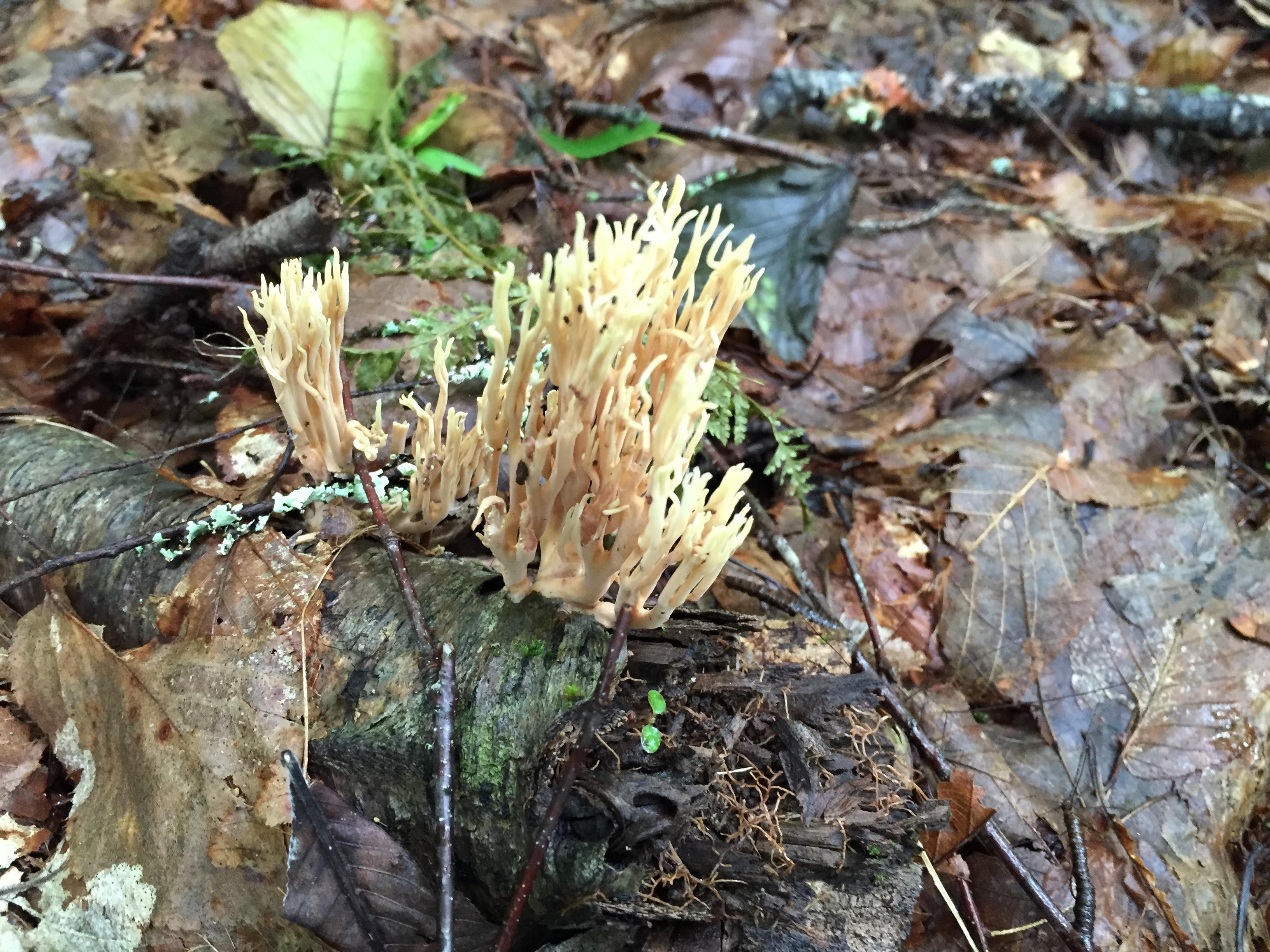
Coral fungus
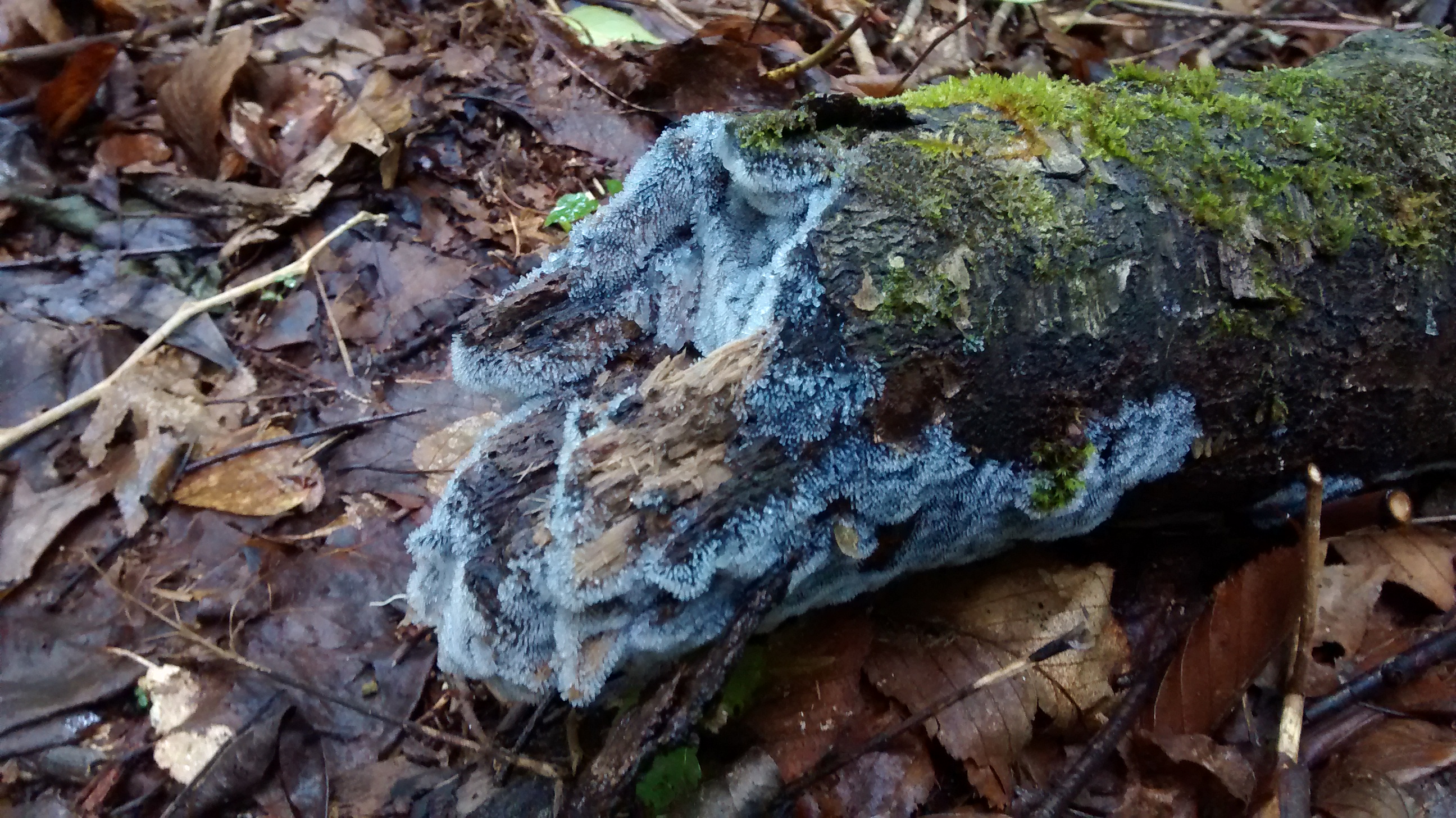
Slime mold
The striking thing about the wildlife we saw was that quite a few are threatened or endangered, particularly in certain parts of their habitat ranges, and very few opportunities are left to see these species. Having the chance to see these organisms was certainly a wonderful experience. However, our hiking hack aspired to garner the potential of technology – something that seems to be incompatible with nature – to encourage people to engage with the natural environment and instill a sense of stewardship. Helping to preserve these natural wonders – that is a truly exciting prospect indeed.
~ Angela